NFT IRANIAN ARTISTS
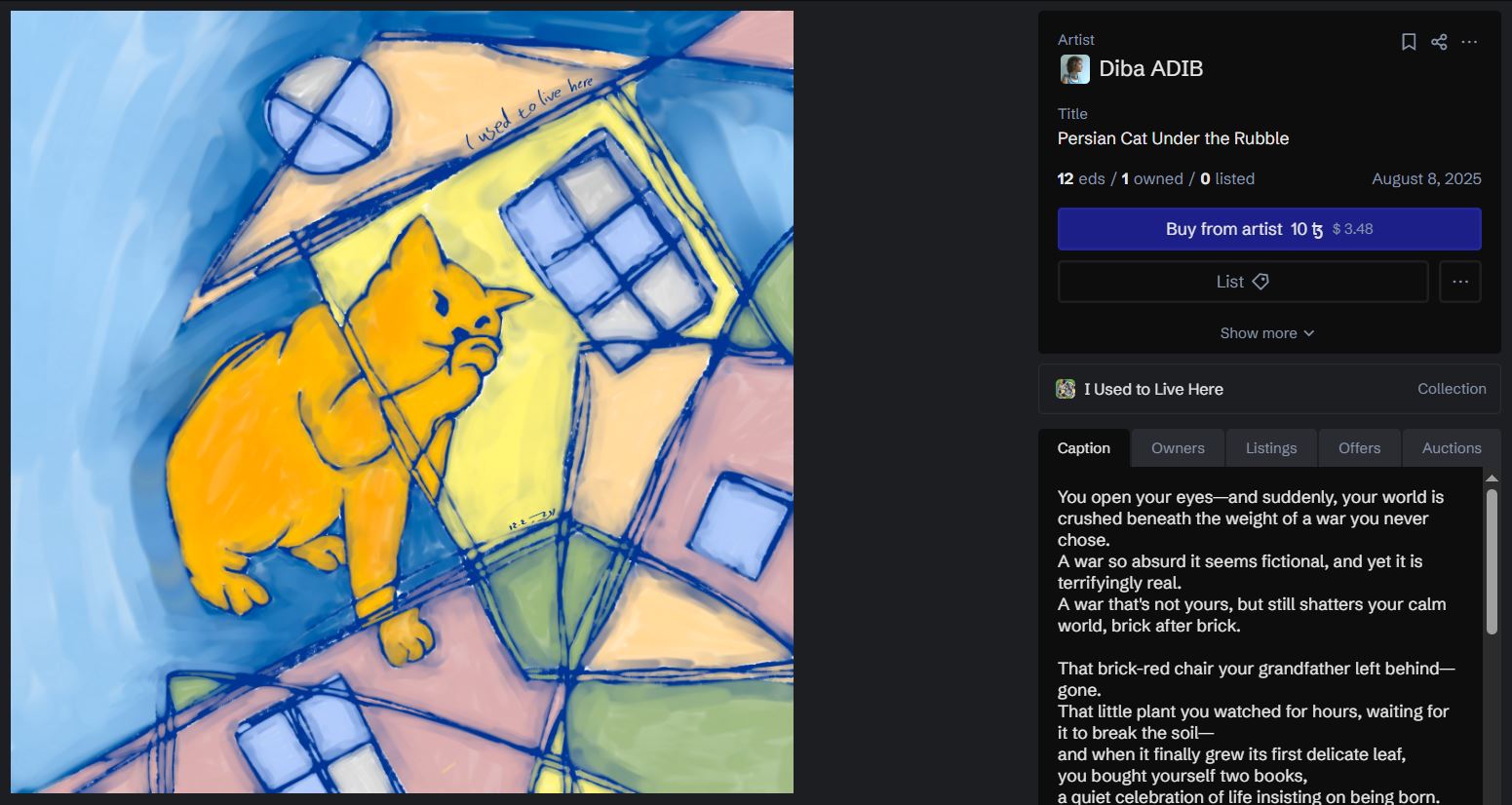
This is a list of Iranian Artists from our community, and I definitely missed someone amazing. If that’s you, or you see I forgot someone, let me know, and I will add. Please support their work by collecting or sharing their art with your followers. Collect the featured image, “Persian Cat Under the Rubble” by @Diba_Adib_art or discover your next favorite artist below. Go to the Infinite Six Gallery
Support Iranian Artists
Support Iranian Artists
Photography Composition Techniques for Beginners
The other day I was standing in the kitchen, just doing the dishes, when I started to think about composition. You have to let your thoughts wander because doing the dishes is boring.
That’s how we end up with posts like “Photography and the Art of Seeing“. I think a lot about everything… and nothing.
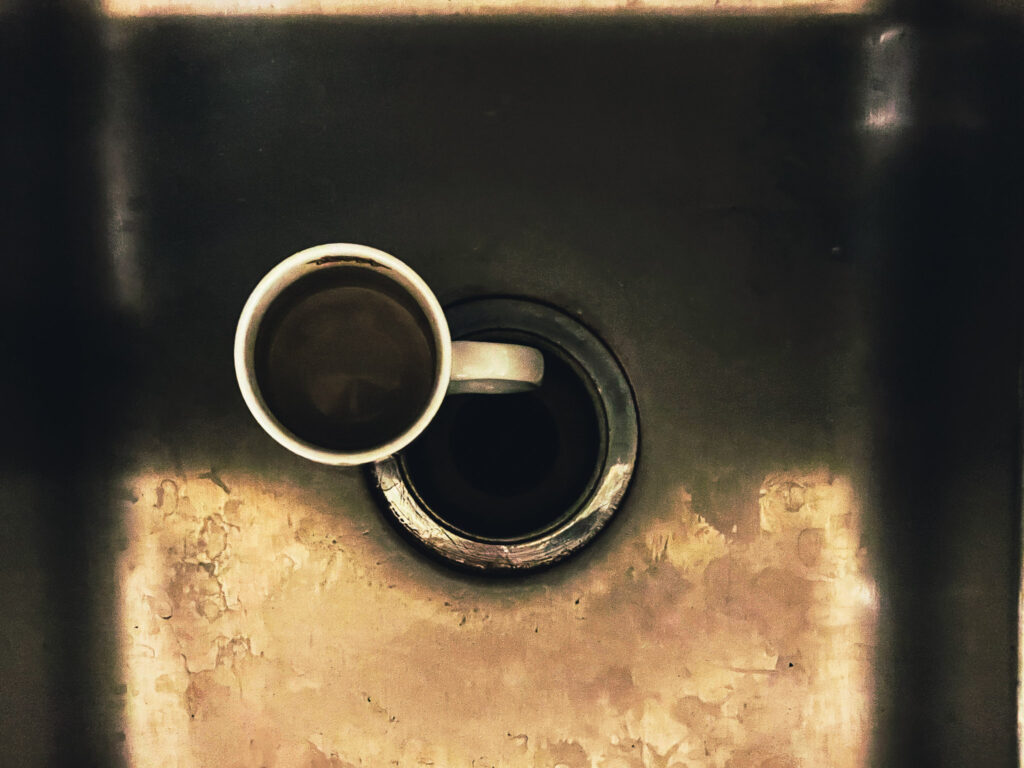
Like these dishes in the sink. The coffee mug was just sitting there, kind of off-center and overlapping the drain. Not even in the light.
Then I started thinking, is there a photo here? Turns out… not so much. But, as mundane as this scene is, it got me thinking about balance. It got me thinking about composition.
Even Penny the Pug had some input. She was standing there at my side, and I swear I heard her say something like, “That cup has terrible composition,” followed by… “You got any of those table scraps?”
You know, she was giving me that look: The “Michael, you need to give me food look” and maybe the “Michael, you need to get out of the house more”, look.
And I guess that’s the thing about photography. You can become obsessive. Not just about light. Not just about photography composition techniques. But about how you see. The world becomes one long hunt for balance, lines, and frames.
Even in the kitchen sink.
Why Composition in Photography Matters More Than You Think
So maybe the best way to think about composition is like cooking. Yeah, we are staying in the kitchen.
You can cook pasta without salt, sure, but it won’t taste right.
Same with photos. You can press the shutter without thinking about where things land in the frame, but the result often feels off.
Now, honestly, sometimes throwing the camera in the air and just hitting the shutter is fun. Sometimes you end up with the happy accident that never would have happened if you were trying too hard to follow a recipe.
But most times, it will feel like something could have been better. That’s because composition is the seasoning. It’s what makes a viewer stop scrolling, tilt their head, and wonder why an image feels right… or wrong.
In this post, we’ll walk through the essential photography composition techniques every beginner should know. You’ll get practical tips you can use right away, but also a way of seeing the frame differently.
My First Encounter With “Rules” of Photography
Back when I first got my Canon 60D, the manual felt like it was written in another language. ISO, aperture, shutter speed… okay fine, I could Google that. But when someone said “rule of thirds,” my brain started to get lazy.
It wasn’t until I was walking around my neighborhood in the winter, the light bouncing off snowbanks, breath fogging in front of me, hands freezing, that I realized I’d been centering everything out of habit. Trees dead-center. Street signs like bullseyes.
A friend showed me how moving a subject off to the side instantly gave a photo more tension. It was like learning a new chord on guitar. Suddenly, I had options.
That’s when it clicked so to speak. You see, composition isn’t about following rules. It’s about creating choices.
1. The Rule of Thirds: Your First Training Wheels
I know, but this post is for beginners. We can’t just skip rules because you know it all.
I get it, you might even think the rule of thirds is overrated, but it’s still one of the easiest ways to start improving photos fast.
And it’s simple. Just divide your frame into a tic-tac-toe grid (most cameras/phones can show this on screen). Place your subject along one of the lines, or at an intersection, and watch the magick.
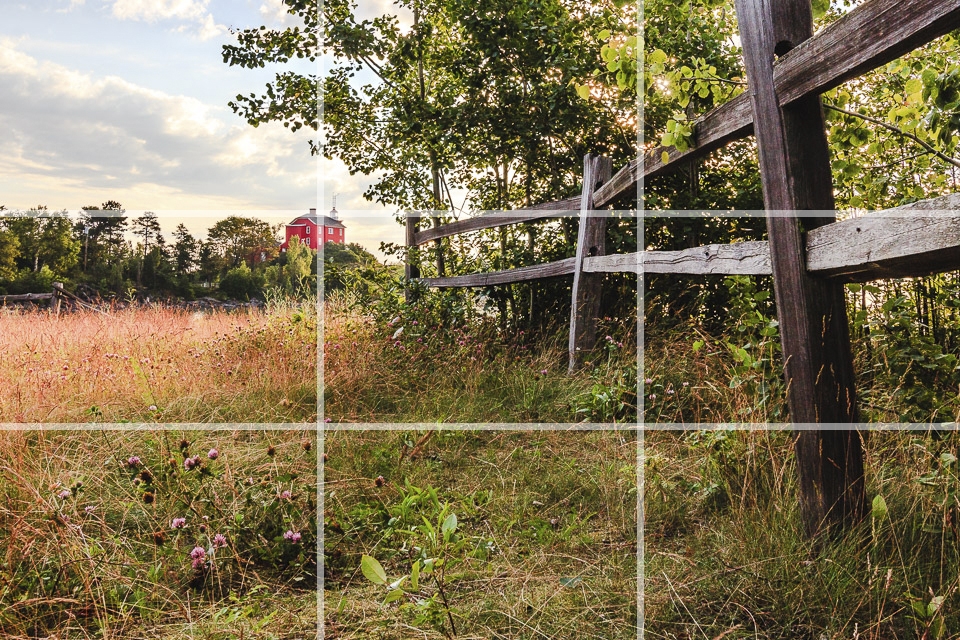
Why it works: our brains love asymmetry. We don’t consciously notice the grid, but the balance feels natural.
See Imagery Tip: next time you’re photographing a friend at a coffee shop, don’t plop them in the center. Shift them left, and let the neon sign in the background fill the empty space. Suddenly the photo tells two stories at once.
2. Leading Lines: Let the World Point For You
If you find yourself wandering down a sidewalk, notice how the cracks stretch into the distance. Those are leading lines, and they love to guide viewers straight into your photo.
Roads, rivers, fences, shadows. You can find lines in anything that stretches away from the foreground, and they help pull the eye where you want it.
See Imagery Tip: crouch lower. No, lower than that. The closer you get to the ground, the stronger those lines become. A boring street turns into a dramatic runway just by changing perspective.
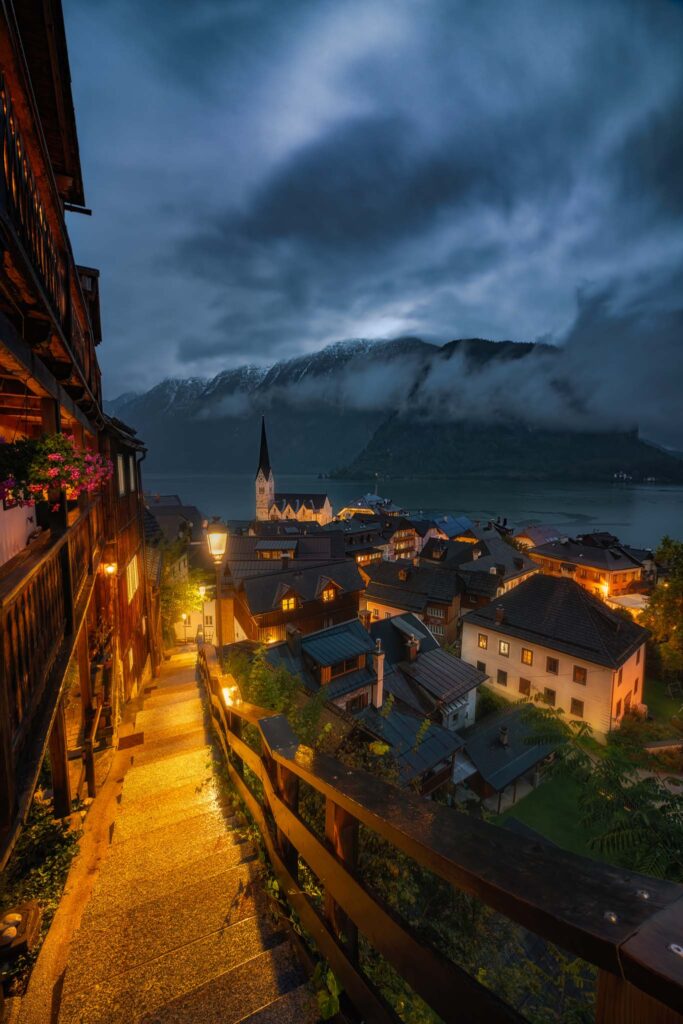
Below: The Painter’s Curse by Alexander Seleznyov is a great example of leading lines. The steep, illuminated staircase in the foreground acts as a powerful visual guide, drawing us from the bottom left corner deep into the heart of the village. Your with me right? Let’s go… What an amazing shot!
3. Framing: Frame within a Frame
One of the hardest things about photography is deciding what to leave out. That’s where framing comes in.
At some point, you’ve probably shot through the rear-view mirror of your car just to see what that looked like. Why? Because you were looking for a bigger story than just pointing your camera straight out the windshield.
Use what’s already around you. Think windows, arches, doorways, and tree branches to create a frame within a frame. It adds depth, context, and sometimes a bit of mystery. Saul Leiter was a master of using frames within a frame.
Now get out there and find some more frames, within a frame. The photography gods demand it!
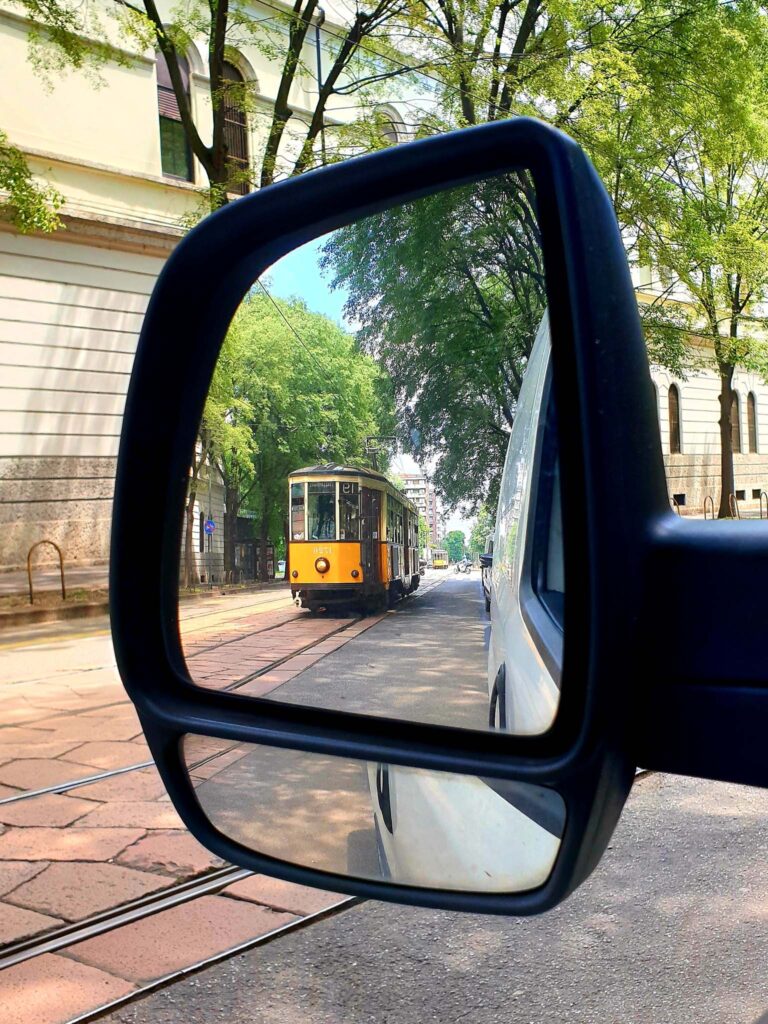
Below: In Street of Milan by CappeSandro, the car’s side-view mirror serves as a great frame within a frame isolating the iconic yellow tram and the lush, tree-lined street behind the vehicle. This double-framing technique creates a layered perspective that’s pretty cool, don’t you think?
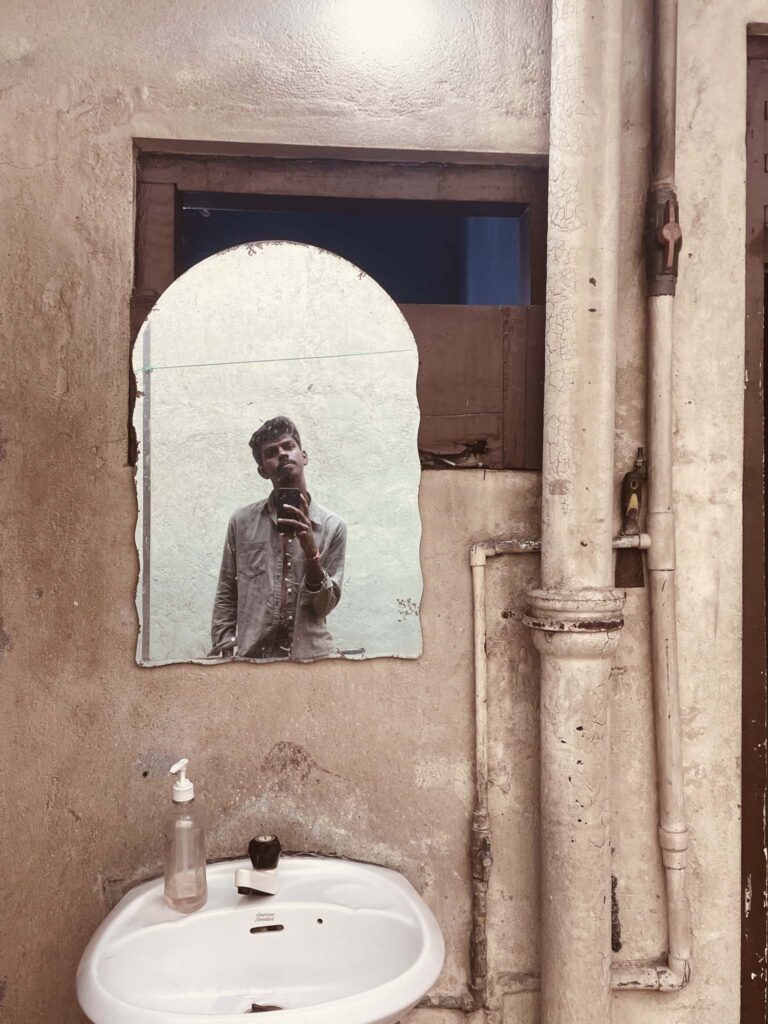
Below: Still Alive by oddshotsgallery uses the “frame within a frame” technique to transform a simple self-portrait into a layered narrative about presence and environment. I really love that the gritty textured walls give the smooth glass mirror a warn textured appearance to frame our subject.
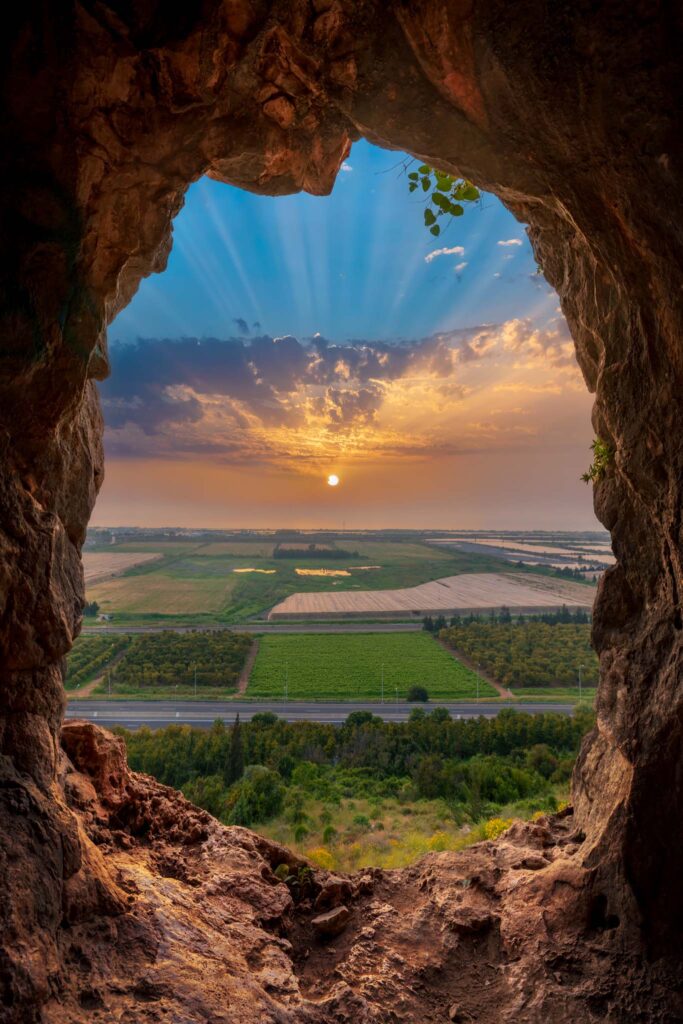
Below: Sunset Window by Alexander Seleznyov. Frame within a Frame works great with mirrors and reflections but don’t forget arches, doorways, tree branches or whatever else you can find to create a frame within a frame. Here, Alexandeeer masterfully employs the “frame within a frame” technique by using the rugged, dark opening of a cave to encase the vibrant landscape of Zikhron Ya’akov, Israel.
4. Symmetry and Patterns: Order in the Chaos
Humans are weird. We crave order even while driving around in our messy cars. OK, maybe that’s just me. Maybe you are the opposite, and don’t have shit everywhere.
Either way, symmetry and patterns work for us when it comes to our photos.
A row of lockers, identical windows, repeating tiles. All these create rhythm. And if you break the pattern with one odd detail, the photo gets even more interesting.
Example: picture a row of shoes lined up outside a gym. Then one Croc is turned upside down. That’s the photo.
Do you have any photos that bring a little order to the chaos?
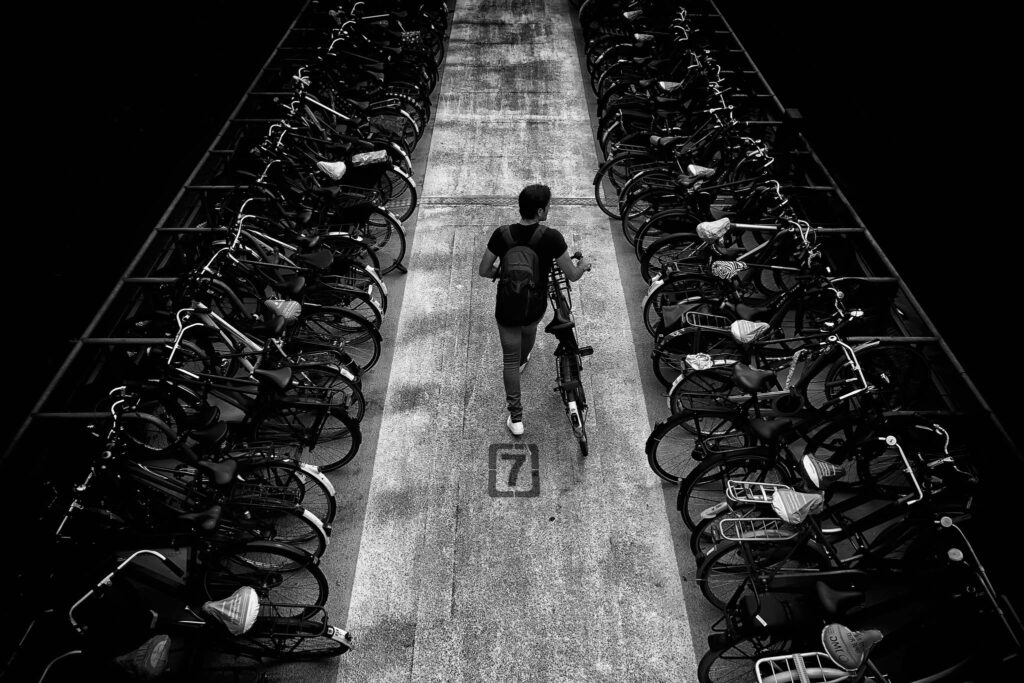
Below: In se7en by Mustafa Erbaş, the strong vertical symmetry of the bicycle rows creates a rhythmic pattern that anchors the entire composition. The high-contrast black and white really helps to emphasize the repeating geometric shapes of the wheels and frames. The single figure walking his bike helps to break the repetition and provides a perfect focal point that gives the image a sense of scale and purpose.
5. Negative Space: Let the Empty Parts Breathe
Sometimes it helps to stop filling the frame with stuff.
Negative space is the art of letting emptiness do the work. A single bird against a wide sky. A person dwarfed by a blank wall. Silence inside the picture.
Some people are really good at this. They have a knack for breaking down a scene into its most simple form.
You probably don’t realize it, but the empty areas are just as powerful as the subject. They create mood. Think isolation, freedom, loneliness, calm.
See Imagery tip: next time you’re shooting on a cloudy day, don’t crop the sky out. Make it most of the frame. Let your subject shrink.
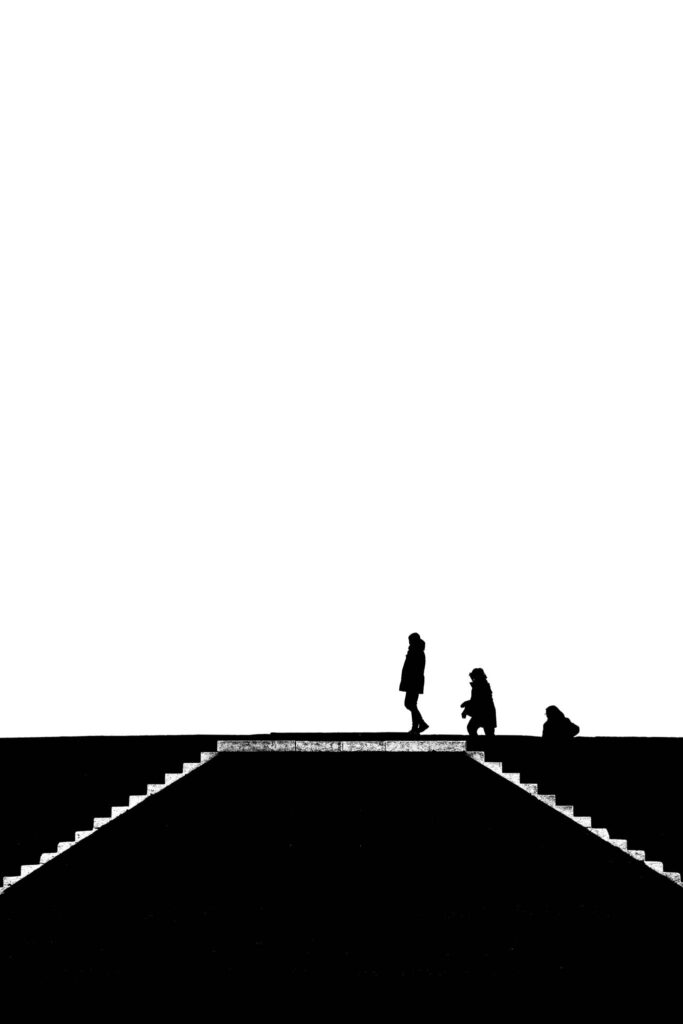
Below: In The Ascent by Ritchie Sacramento, the vast expanse of white negative space dominates the upper two-thirds of the frame, creating a minimalist aesthetic. This intentional “emptiness” isolates the silhouetted figures. The sharp geometry of the stairs, heights the sense of scale and creates this feeling of a long, solitary climb towards a future unknown.
6. Depth and Layers: Photos Aren’t Flat, Even If They Pretend to Be
At some point, you’ll notice your photos look flat compared to what your eyes saw. That’s because cameras squash reality into two dimensions.
The easiest way to fight back? Add layers.
Put something in the foreground. Include a fence, flowers, or even some random stranger’s shoulder. Just keep your subject in the middle layer, and let the background tell its own story.
Suddenly, your photo has depth. It feels like you could walk right into it.
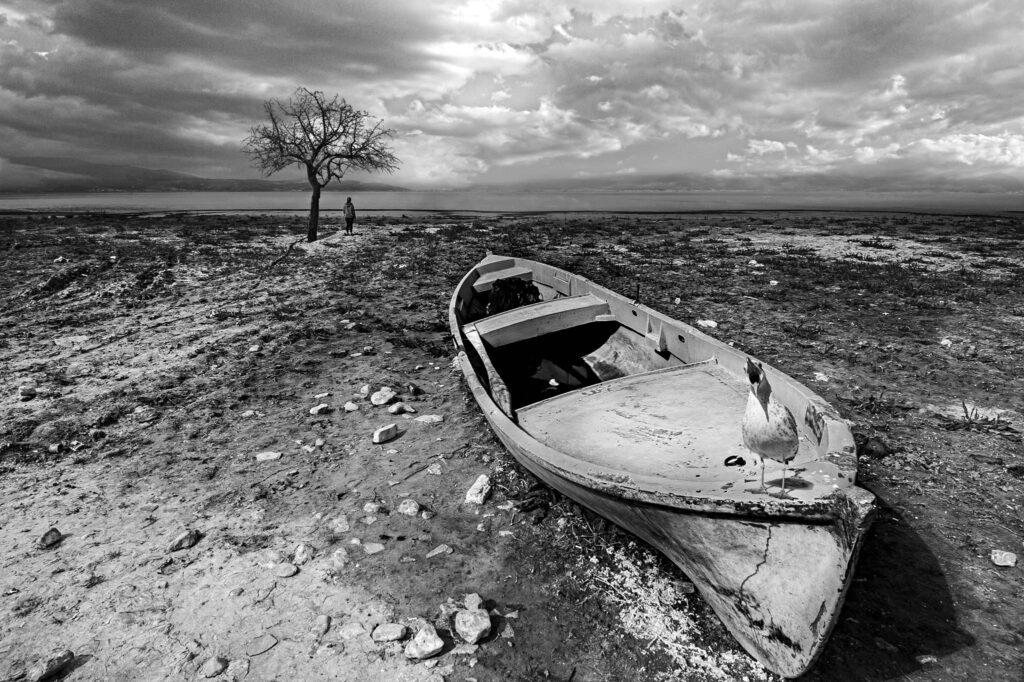
Below: In Dry Summer by Suleyman Tutus the composition uses distinct foreground, midground, and background layers to create an immense sense of depth. The weathered boat and gull in the immediate foreground anchor the viewer, while the lone tree and figure in the midground draw the eye further into the barren landscape. This leads finally to the distant, hazy shoreline and dramatic sky, emphasizing the vast, desolate scale of the dry summer.
7. Breaking the Rules: Because Your a Rebel!
The weird thing about photography composition techniques is that the “rules” are more like training wheels. They help you ride, but eventually you take them off.
Center a subject dead in the middle if you want intensity. Tilt the frame if balance feels boring. Chop someone’s head out of the photo if the story is really in their shoes… or wheels.
The problem is when photographers never break the rules. Your images start looking like everyone else’s.
So maybe the best way to learn composition is to follow the rules long enough to understand why they exist… and then start ignoring them one by one.
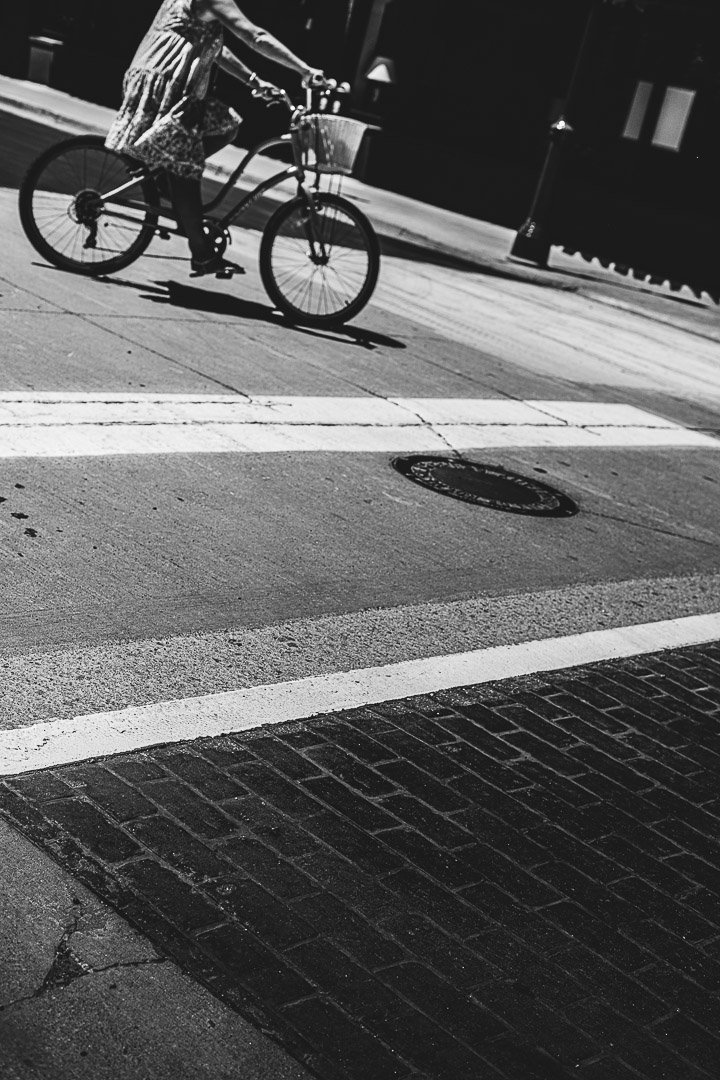
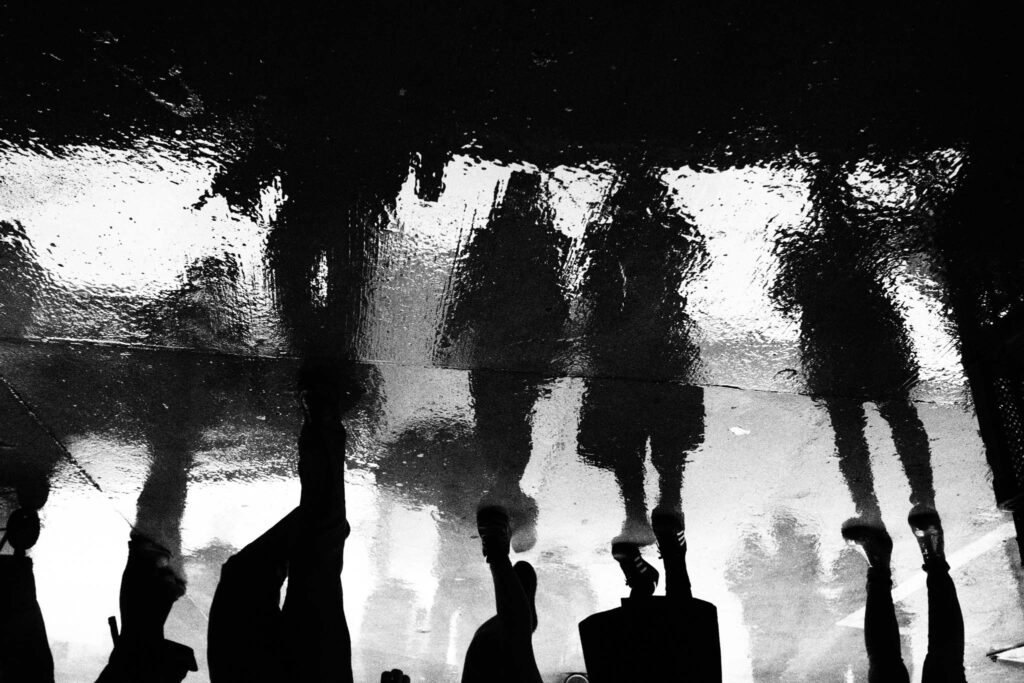
Below: In Fallen World by Görkem Keser some rules may have been ignored, broken, and abandoned by the side of the road… And that’s how we like it. What makes the image so compelling is how confidently it breaks the usual rules of photography. Do we have a clean subject, an obvious focal point, or a tidy horizon? Do we have the visual stability that traditional composition usually asks for? Not really… instead of guiding the viewer with order, the image leans into imbalance, abstraction, and uncertainty. The reflections are distorted, the figures are fragmented, and the scene feels almost upside down emotionally as much as visually. That is exactly why it works. By ignoring the expectation that a photograph should be clear, centered, or easy to read, the image creates something far more memorable. It proves that sometimes breaking the rules is what gives a photograph its voice.
8. Don’t Try So Hard: Just Let Chaos Rule
Sometimes you can just point your camera in the general direction you want to take a photo and press the shutter to see what happens. Yeah, I’m not joking.
There is a random chaos to it that your brain can’t seem to duplicate. Your brain wants order. But sometimes the missing ingredient is something beyond your control.
You can’t see it because it’s not about foresight. It’s about chance. It’s about finding meaning and imagination in the “happy accident” that’s only available to those who roll the dice.
I think Bob Ross would love the idea of embracing uncertainty, don’t you?
See Imagery Tip: Carelessly lift your camera in the general direction of your subject and press the shutter. You have one photo of chance. Now, aim, recompose to appease your brain, and see how the stories between the two photos differ.
How to Train Your Eye – Practice Everyday
You don’t need a big trip to practice these techniques. Try these little exercises:
- Shoot repetition: 10 photos of cracks in the sidewalk. Then lay them out together.
- Flip perspective: Photograph the same object standing, sitting, and lying flat on the ground.
- Limit yourself: Only shoot vertical frames for a week. Or only reflections.
- Borrow a kid’s view: Hand the camera to a child and see how they frame the world at 3 feet tall.
Photography composition techniques aren’t abstract ideas. They’re habits you build by noticing the everyday weirdness around you.
Composition in the Digital Age – Instagram Grids and AI Weirdness
OK, we are almost done with this post but I wanted to touch on Instagram and AI real quick.
One of the hardest things about shooting today is that everything gets compared on tiny screens. Your masterpiece shrinks to a 3-inch square between the perfect food flat lay and cat memes.
Don’t get me wrong. I love cat memes.
But that’s why composition is more important than ever. Strong shapes and clear subjects survive the noise of someone lost in the doom scroll. At least that’s the hope.
And then there’s AI.
You love it, You hate it, or you love to hate it. I’ve said it before and I’ll say it again. My relationship with AI is at best… complicated.
It generates “perfect” compositions by default, but sometimes too perfect. Which makes me want to keep shooting crooked alleys and off-balance photos just for spite. Just because the imperfect feels perfectly human.
Don’t you think?
Closing Thoughts – The Cup is still in the Sink
So yeah, the coffee mug is still sitting in the sink. I wanted to take a photo that felt balanced with the drain and edges of the sink, so I moved the cup and reframed a little. I also moved the cup into the light. I don’t really like any of the photos but I had my fun.

It’s more orderly, giving a calmer, more structured feeling.
Maybe that’s the curse of learning photography composition techniques. You can’t unsee balance once you’ve seen it.
But eventually, it stops being a burden and becomes a kind of game. Like spotting constellations in the night sky or searching for the perfect rock on the beach.
And when you come upon the perfect rock you might think, should I move it to create more interest and balance in the scene? OR, is it more important to capture the moment as it was, as it arrived for you?
I’ll leave that up to you… until next time.
What weird thing did you notice today that could have been a photo?
🖼️ Collect an NFT and support this Blog
📬 Subscribe to get Wednesday’s post + Friday’s What If Nobody’s Watching
💬 Comment below with your own thoughts on composition techniques
💬 What Did This Post Make You See?
Leave a comment and share what this post made you think, feel, or notice.
👀 NFT Friends
Feel free to drop your public wallet address with your comment… because who knows right…
🖼️ Collectors!
If you ended up collecting something from this post—mine or another artist’s—let me know which piece and definitely share your public wallet address.
You know, like pressing the mute button on a conversation to hear if something deeper is happening under the noise of their mouth moving.
Ok sorry, but some people just talk too much.
Where was I… ah yes, back to this decision.
The decision isn’t always immediate. It’s more of a whisper. An idea that sneaks in sideways while you’re driving down the road in a fuzzy day dream.
That’s how most of these black and white photography ideas started. Not from tutorials or books, but from little scraps of paper in my pocket. Let’s call them notes.
This post is from those.
No examples. No final shots. Just the idea soup. Some of these might be shit. They’re not polished. They’re just mine… for now.
And maybe yours too, if you want to try.
Why I’m Sharing Black and White Photo Ideas I Haven’t Tried Yet
If you’re looking for perfect examples or proven techniques, this probably isn’t your post.
What you will find here: Idea sparks. Notes from the corner of my mind… or pocket that haven’t turned into photographs yet.
You might make something beautiful with them. You might stare blankly and go “nope.”
That’s kind of the point.
Either way, these aren’t technical tips. You won’t find “use a red filter to darken skies” or “boost clarity in Lightroom.”
Instead, you will find themed black and white photo ideas you can run with.
Most of them come from mood, memory, or some weird internal monologue I had while refilling my coffee.
Most important: No photo references. No boxes to fit into. Just ideas… shared so you can take them, twist them, ignore them, or make them your own.
And if you do? Share them with me under this Twitter thread. I want to see what you make. If you do that, I might use your photo in this post, with credit of course.
Collector Note: Make sure you tell me which idea you are going for so I can use your photo for the right idea. Bonus, if you mint the photo, I might collect it.
Let’s get to the black and white photography ideas.
1.) Shoot for Silence: Photos That Feel Like Nobody’s There
Not emptiness. Not isolation. Silence.
What does that look like to you?
For me, it might be an empty tire swing swaying slightly in the breeze. Or the slow swing of a door at a laundromat that’s just been exited.
It can be hard to imagine what silence looks like, but the idea is to make a photo that sounds like a room after the phone stops ringing.
What does silence look like to you?
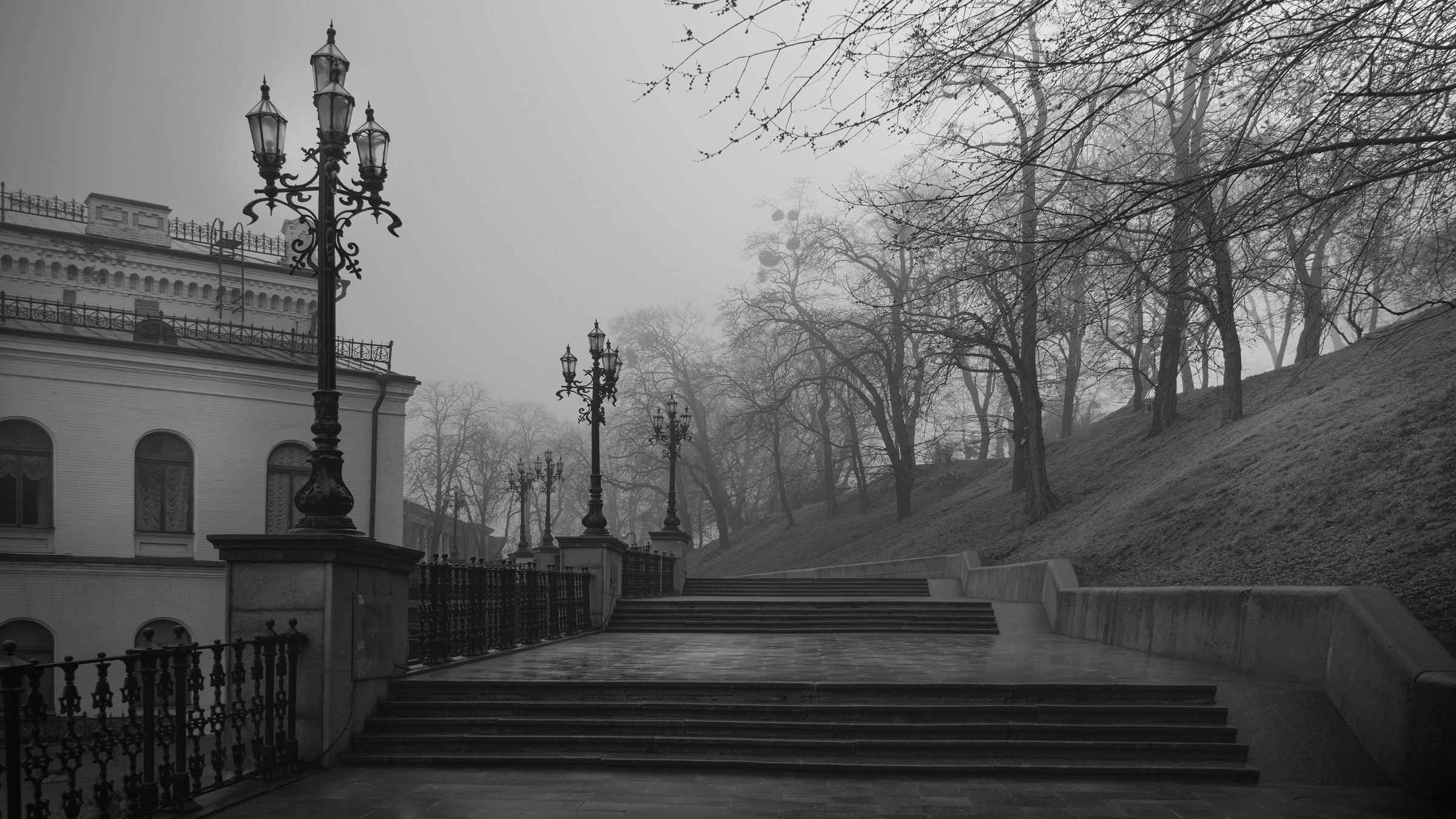
The fog seems to carry the silence in Memory Yet to Be by Marigold – They say, if you stand still in this silence, you might hear your own voice from the future.
2.) Photograph the Edges of Things
Not the thing itself. The edge.
The worn fabric of a sleeve. The corner of a closed book. Where brick meets brick and mortar forgot its job. Focus on thresholds between light and dark, touch and distance, object and shadow.
Black and white makes these lines louder.
In _rest by Emma Samuel and _growth revolution, the broken edge of a vase holding a candle becomes the subject. A sharp threshold between light and dark, fragile and strong, broken and whole. Black and white makes these differences louder.

3.) Document a Place You Know Too Well
Your backyard. Your street. The break room at work. Your bedroom.
The inside of your fridge. I see you.
Shoot it like you’re documenting it for aliens who’ve never been to Earth. It doesn’t have to be all drama all the time. Just the textures. The moments. The light at 5:57 PM when it hits the grandfather clock weird and turns the floor into a dimensional portal.
A portal that leads to the house of our friend Cassi Moghan, where she explores the confines of the mundane in My Boring Life.
So yeah, make it boring. Then make it matter.
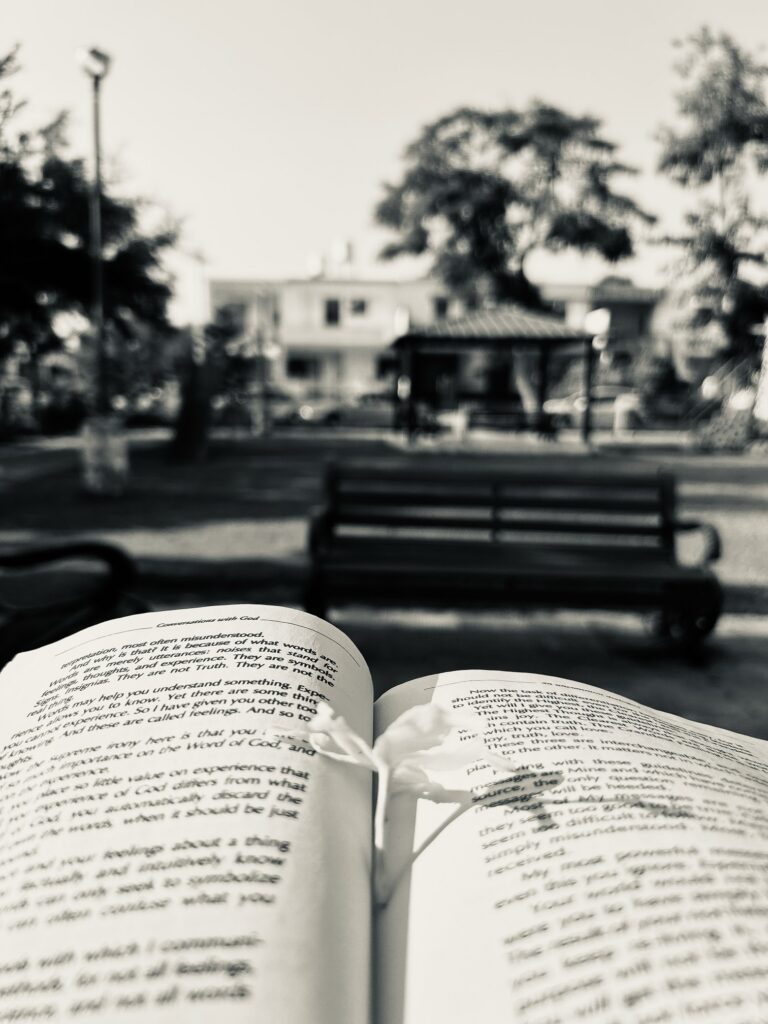
In Leavespan by Harpreet, a familiar park setting is blurred into the background while a book fills the foreground. An everyday scene, yet somehow newly strange. But, like the description says… If you read enough, even the space behind the book becomes familiar.
4.) Treat Shadows Like the Subject
Don’t photograph a person. Photograph their shadow before they arrive.
Don’t photograph a tree. Shoot the shape it casts when the sun’s about to leave.
Black and white images beg for this. Color wants to brag. But shadows? Shadows tell stories in quiet.
For more on shadows: How to Use Shadows in Photography to Create Mood, Drama, and Depth
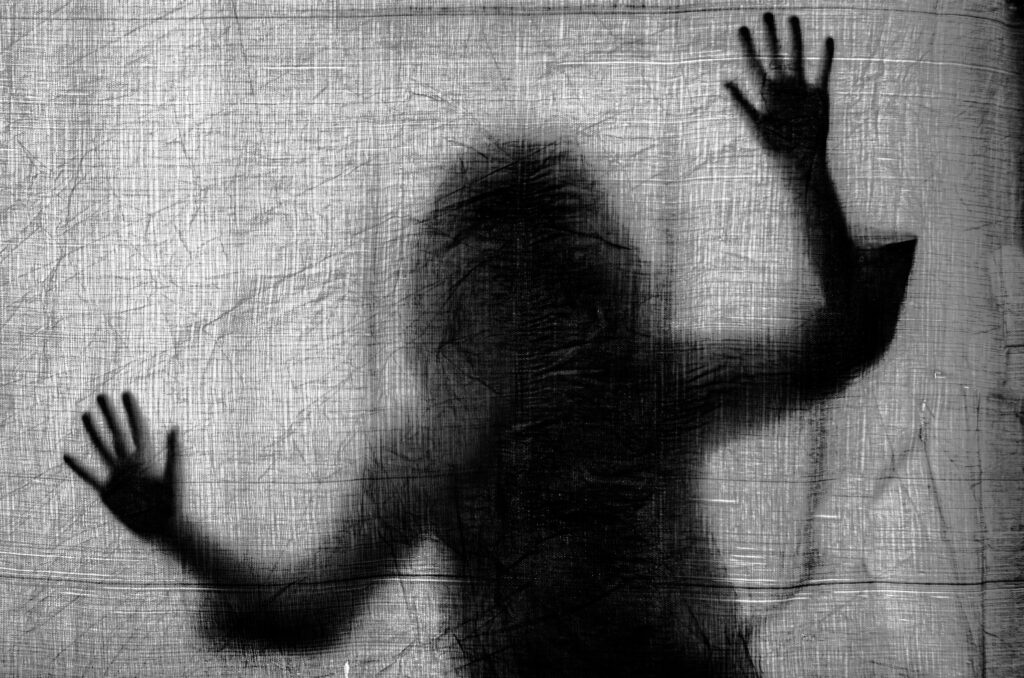
STOP by Süleyman Tutuş is a creative example of how a shadow is the subject.
5.) Build a Story With Repetition
Find a repeating element. Anything, shoes at the gym, cracks in a sidewalk, windows that don’t match, and shoot only those.
Ten shots. Same subject. Different days or angles.
Then arrange them. Let the viewer notice the similarities first… then the odd one out.
Monochrome gives repetition more space to speak.
Many thanks to SAJI FALL for bringing this idea together so beautifully in “The Story“. Many folks got mixed up when I first shared this and thought I meant repetition inside a single photo. What I was really talking about is repetition across a collection, a series of images that echo each other in subject or form. It’s about building a rhythm from photo to photo, letting the whole set speak as one, with the variations adding the twist.
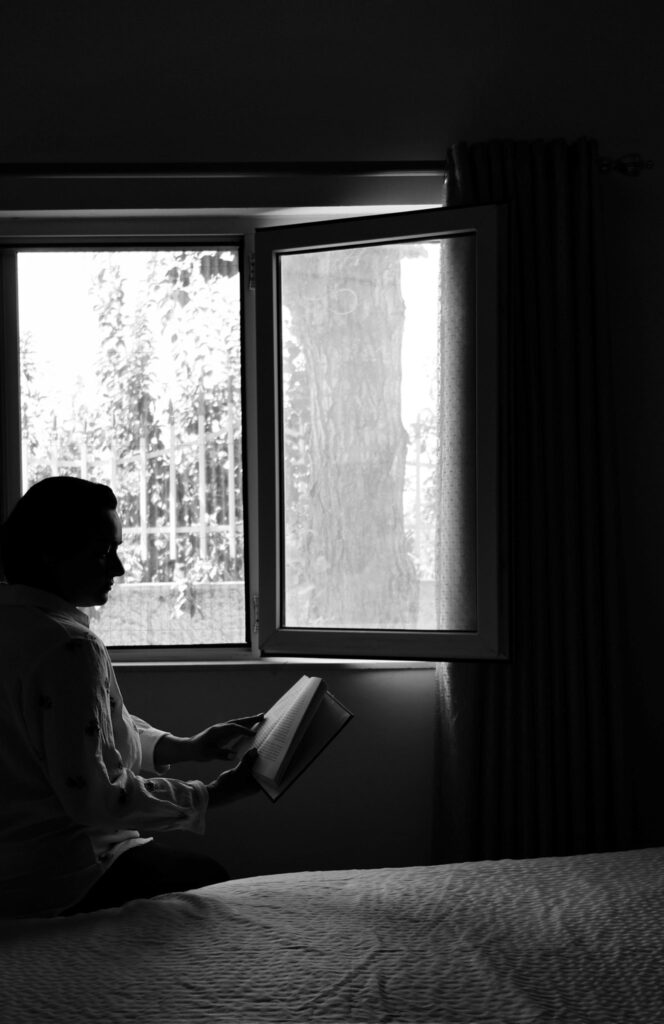
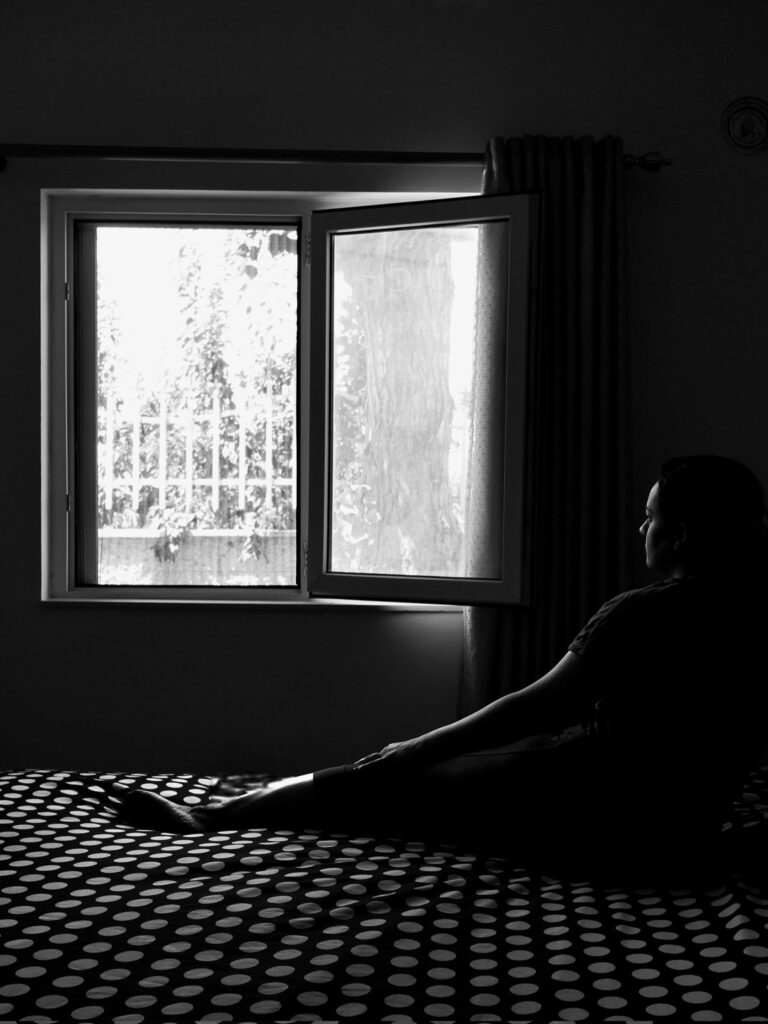
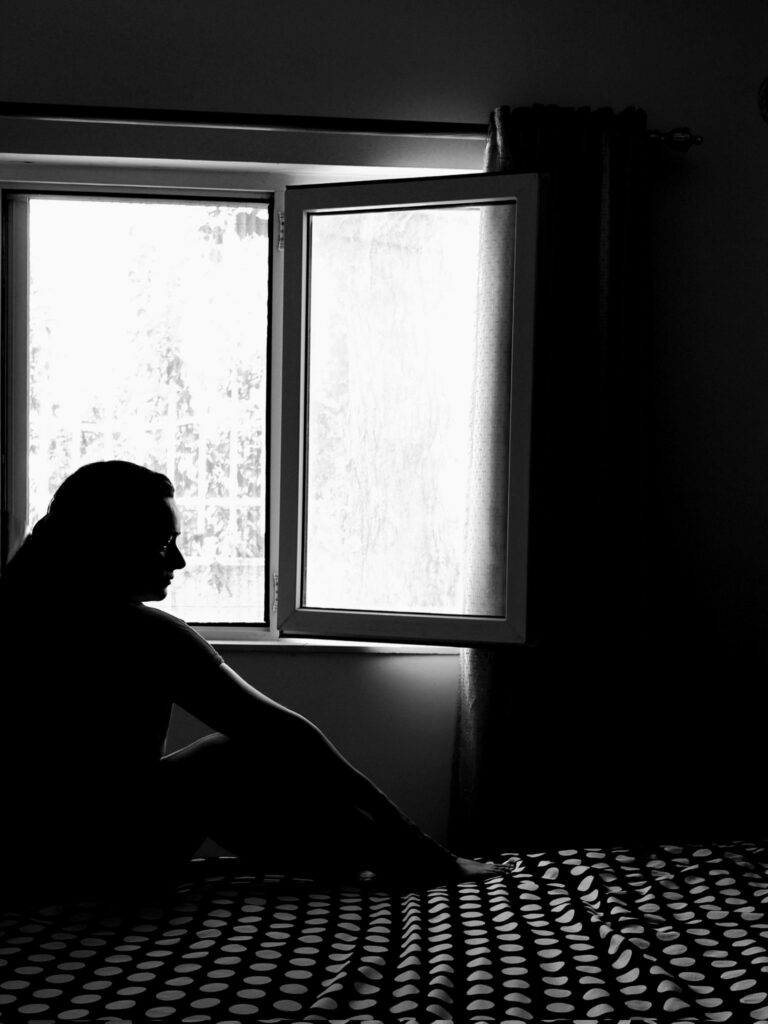
6.) Photograph the “Before” of Something You’ll Never See the After Of
A dinner table before people arrive.
A wedding dress hanging.
A bed just before someone sleeps in it.
An empty stage with instruments.
You don’t need to document the whole story. Just the part that makes people imagine the rest.
Black and white adds a layer of fiction. Let it.
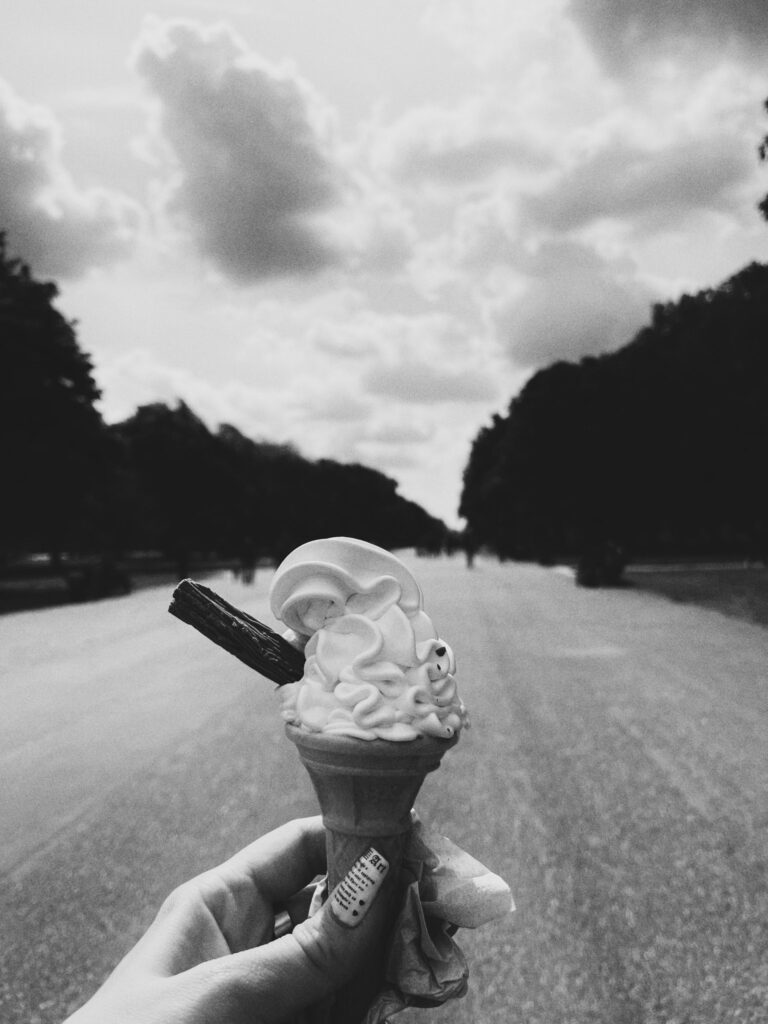
Shout out to Sashelka.ᵉᵗʰ♡ for this image of a delicious-looking Ice Cream treat before the reckoning. I think we all know where this story leads. You can find more of her work here: Objkt Profile
7.) Chase the Weather You Usually Avoid
Go out on foggy mornings. Wet snow. Blistering sun at noon. Muggy humidity that makes every surface feel soft and gross and difficult to breathe.
OK, maybe if you can’t breathe, stay in.
But rain, definitely go out in the rain if you’ve been avoiding it, but I don’t know why you would do that.
Don’t look for the perfect shot. Look for what these moments feel like without color to help you name them.
Monochrome loves bad weather. It makes you work with texture, shape, contrast, instead of the crutch of a sky that “pops.”
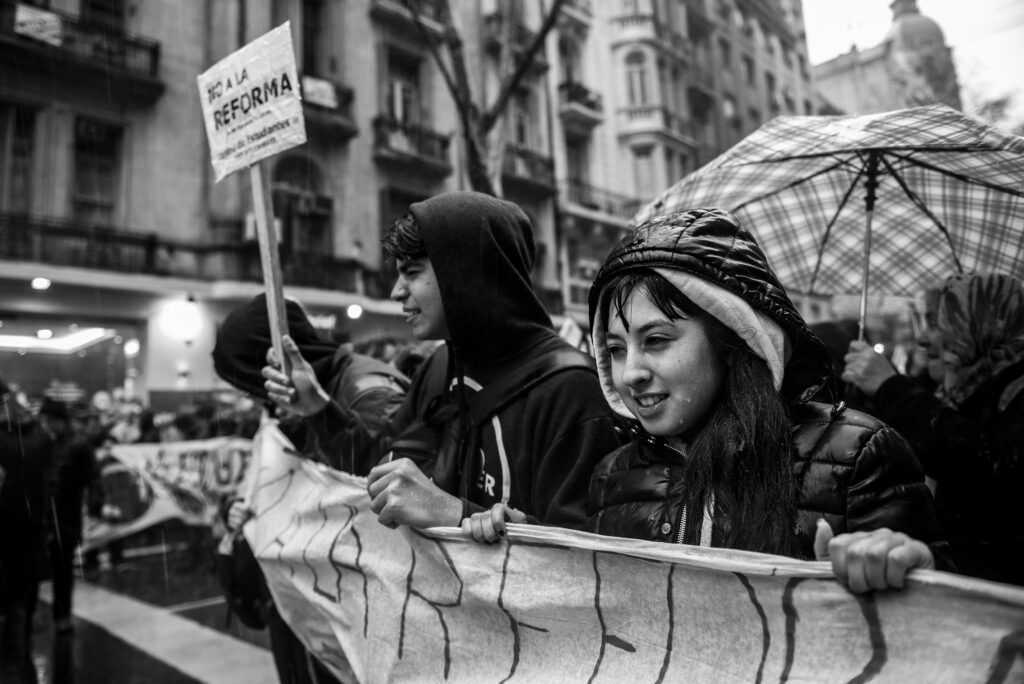
Against the Storm – Photography by Mellodora. Rain or shine, the story doesn’t wait… sometimes you have to step into the storm to capture it.
8.) Photograph Something That’s Already Dead
But not morbidly. Sally Mann already did the dead decomposing bodies thing.
I mean just… naturally past its prime.
I’m thinking more of a broken toy. A crushed can. An old phone booth. An old antique clock. An old couch sitting near the edge of the road.
Black and white strips sentiment and asks you to notice detail.
It helps you ask: what’s left behind when something’s done?
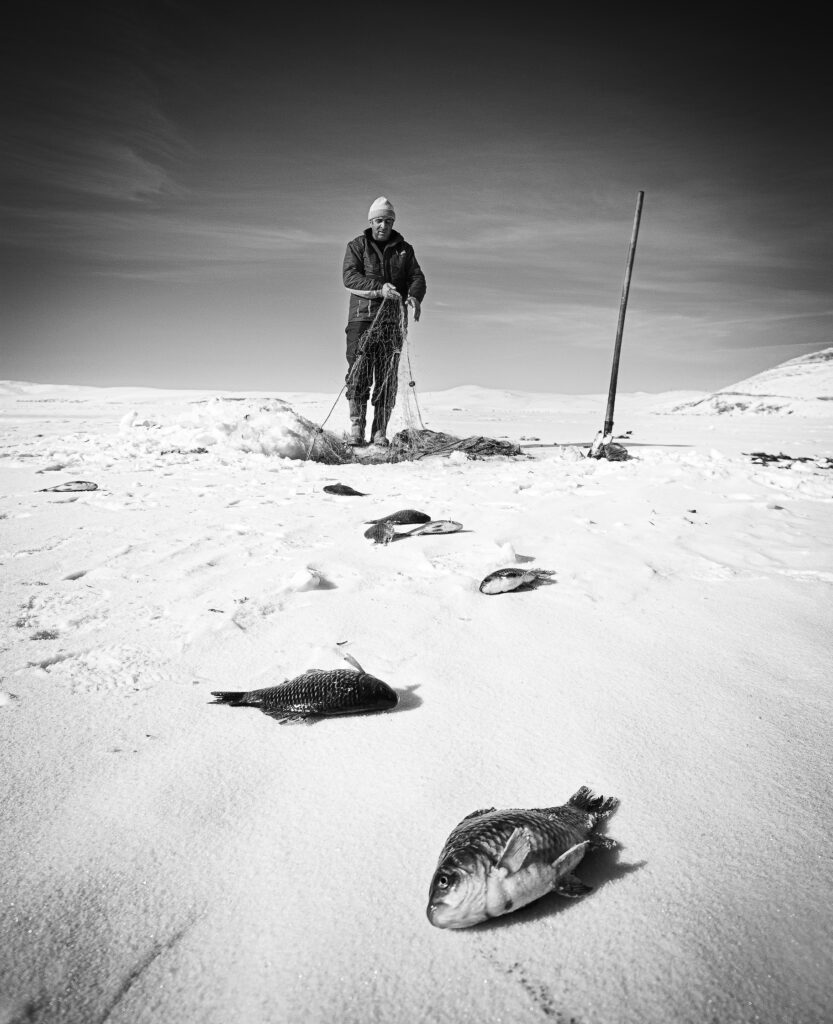
OK fine, maybe I did mean dead, gone, kaput because these fish look done… and cold. Frozen Lake by Mustafa Erbaş depicts fishing on a frozen lake. In Çıldır Lake in eastern Türkiye, nets are placed before the lake freezes, and after the lake freezes, the ice is broken and the nets are collected and the fish are laid on the ice.
9.) Use Blur to Suggest a Memory
Shoot something out of focus on purpose. Or capture motion blur. Or shoot through something that smears the edges.
Let the photo become less about clarity, more about the feeling of remembering badly.
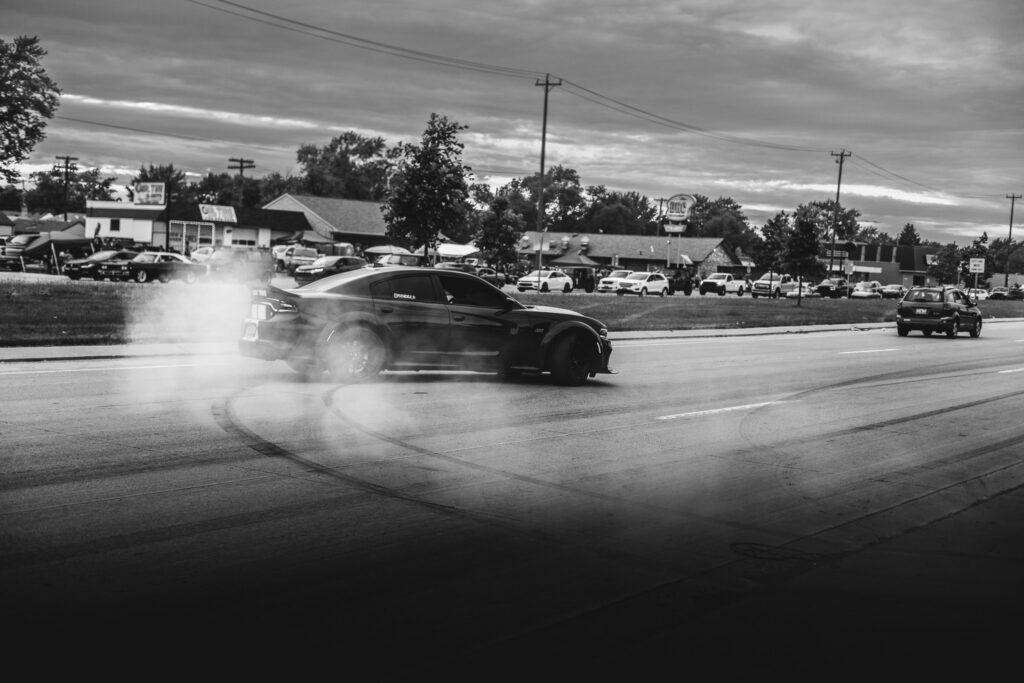
A fuzzy daydream as you’re cruising down the road (see featured image).
Black and white turns blur into metaphor.
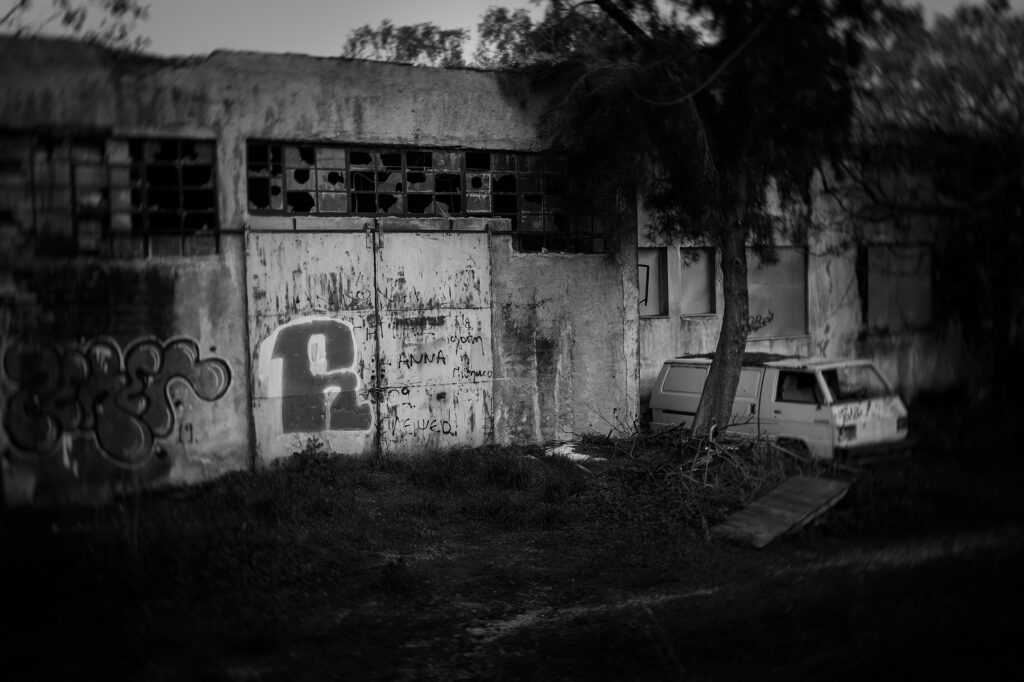
The following image was submitted by Cassi Moghan. The Van has a soft blur around the edge that makes it feel like a half-remembered place from a dream, more about the memory than the details.
10.) Photograph Something You Feel Guilty About
This don’t have to be a confessional. It can be subtle.
Maybe it’s the dishes you said you’d do. Or the pack of cigarettes you swore you quit. Or a place you visit but pretend you don’t.
Shoot it honestly. With care. Like it matters, even if you’re still not sure it does.
Monochrome invites honesty without the fuss. You don’t need to explain yourself. Let the photography be your confession.
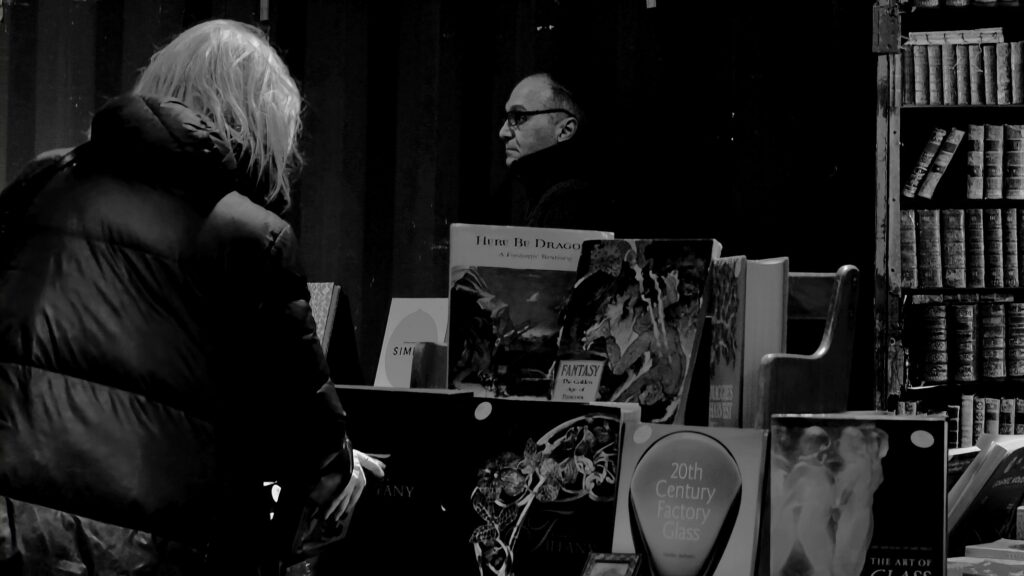
In Echoes Between the Pages by Bayne, the nostalgia of a bookstall with its worn paperback pages stirs a quiet guilt in the photographer. It’s a reminder of stories once held in hand, now too often replaced by the glow of a screen. I love how the photograph seems to linger between past and present, holding space for what we’ve set aside but never stopped yearning for.
11.) Make a Portrait With No Face
Try this: shoot a portrait that says something about the person without showing their face.
Hands. Their desk. The mess they leave behind. The way they wear their coat.
Black and white strips the image down to essence.
So let the essence speak. No face.
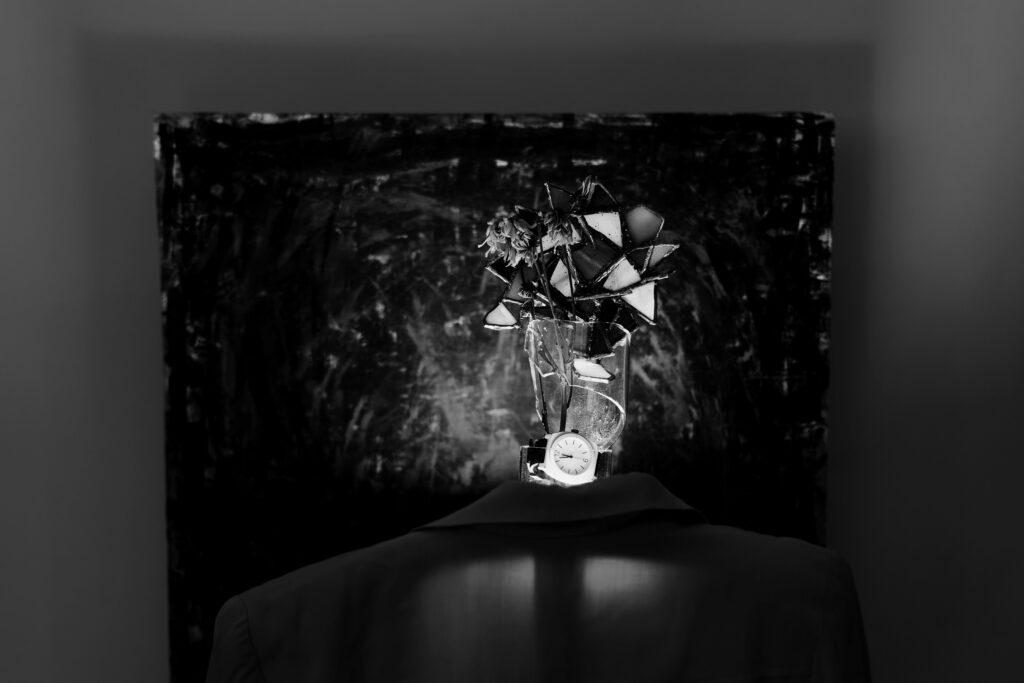
The following image was submitted by _growth revolution who explains, “_the hollow” is a portrait without a face. Just the weight of items to portray the space we hold for memories.
12.) Photograph Things That Don’t Match Their Environment
A beach ball in a parking lot.
A chair in a hallway where it clearly doesn’t belong.
Photograph it without irony. Let it be quiet and strange. Let it feel like a dream you almost remembered.
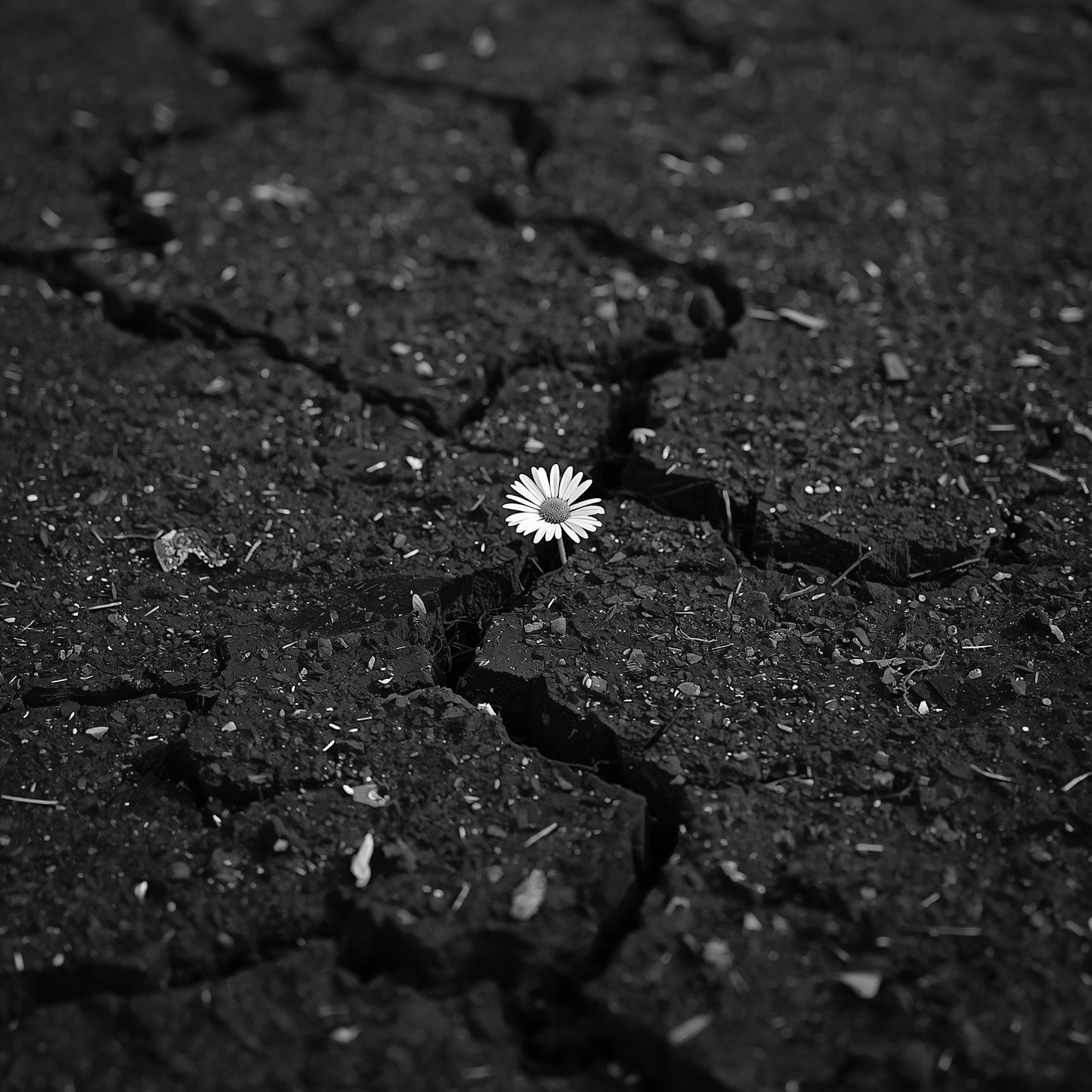
Like how I’m Still Alive by ALI depicts a tiny flower pushing up through the deep, cracked earth. A fragile life in a place that looks like it shouldn’t allow it.
13.) Look for Absence
Instead of chasing interesting things, look for what’s missing.
A shelf with only one item. A conversation with only one participant. A space where something should be… but isn’t.
Let black and white exaggerate that absence.
Let it feel like forgetting…
or remembering…
Where the silence took you and the Absence you left.
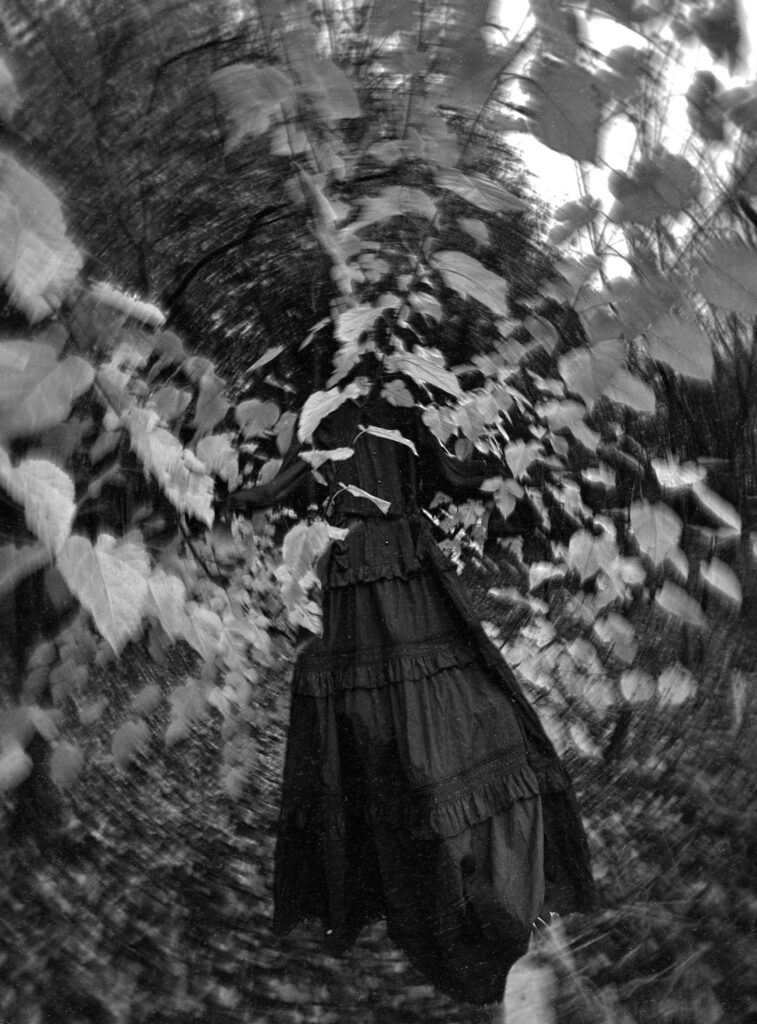
Where the Silence Took You by CORAlinesaidso.tez – This piece is in the memory of one of my friends whom i recently lost. she loved wearing dresses and she was an autumn lover… this photo is an ode to her
Final Thought, If You Made It This Far
There’s something beautiful about not having it all figured out yet.
None of these ideas are groundbreaking by their self. Most of them probably won’t work the way I think they will. But that’s the magic of it. Trying without knowing.
And I want to see what you try too.
If any of these ideas spark something in you, shoot it. Then reply to this Twitter post with your image. Or post it anywhere and tag me.
I’ll be updating this post later with some of your work, not as “examples,” but as echoes. Proof that a weird little idea might lead somewhere.
☕ This Blog Runs on Coffee – Buy me a Coffee to help fuel the late nights and early mornings.
📬 Subscribe to get next week’s post + Friday’s “What if Nobody’s Watching”
💬 Comment below: Which idea are you most tempted to try first? Or do you have your own that belongs here?
💬 What Did This Post Make You See?
Leave a comment and share what this post made you think, feel, or notice.
👀 NFT Friends
Feel free to drop your public wallet address with your comment… because who knows right…
🖼️ Collectors!
If you ended up collecting something from this post—mine or another artist’s—let me know which piece and definitely share your public wallet address.
A few days ago, I saw this post from Chase Jarvis on LinkedIn. It started with a message he probably receives a lot.
“Chase… I’m about to lose it. How do I get anyone to give a sh*t about what I’m doing?!”
Which immediately made me think, yeah, I have the same question.
The person in the post had done everything they were “supposed” to do, allegedly. You know, they made good work, shared it online, maybe even paid for a template or two to make it look official.
But the response? Crickets. Or maybe just one cricket. I know that cricket. And even it’s tired. Eventually. Just… silence.
And Chase’s answer? It wasn’t some magic marketing trick or a platform pivot. It was this:
“You’re only doing half the job. The other half is building a community that’s ready to receive your work.”
I read that line like Chase was talking to me. I knew it was true. Which is probably why I’m not the best person to be talking to you about how photographers can build community.
Because I struggle like hell. I want to build the house and then go have a glass of cold lemonade. And then start the next house.
I don’t want to talk about it. I don’t want to shout about it. And I definitely don’t want to announce about it.
I just don’t really like social media all that much.
But, I decided to write about it because that’s what I do. I write the plan of action so I can internalize it even if I only half-heartedly believe in it.
I write as if, and hope it becomes a matter of fact. And maybe that will help you too. So let’s talk through this.
I Don’t Have a Content Problem. I Have a People Problem.
I probably have almost 100 blog posts on See Imagery and quite a few posts over on Subtack now. I think my content is decent, even if I am living in a kind of low-energy level, functional despair.
Because I’m doing it. I’ve been blogging every week. Yeah, consistency has been a problem in the past, but lately. I’m here. I post new photography. I mint my photography as an NFT. I show up. But still, it feels like I built this beautiful little house, carefully, thoughtfully, with all my best materials, and now I just want to sit on the porch, drink something cold, and admire it.
And instead the world says:
Cool house. Now start knocking on 500 doors and tell people it’s there.
And that… feels like hell.
The Exhausting Myth of “Just Put It Out There”
The internet lied to us, or maybe we misheard, or maybe I just lied to myself. Somewhere along the way, we got the idea that if you just make something good and “share it,” people will care. That your art will float through the noise and land gently in the hands of people who get it.
But it doesn’t work like that. Not anymore. Maybe not ever.
Now the world is more like a crowded Costco on a Sunday afternoon. Everyone’s yelling, carts are colliding, and nobody wants to stop for another free sample, no matter how good the cheese is.
So yes, maybe the work is good. But if there’s no one standing nearby with a paper plate, they’ll never taste it.
What Chase Said (This is the work)
Here’s what Chase wrote that stuck with me the most:
“This isn’t a distraction from the work. This is the work.”
And:
“Your work will remain invisible until you decide to do the WHOLE job.”
I can’t lie. I have been treating the sharing part like a distraction. The social part like a necessary evil I could half-heartedly check off the to-do list.
Being social isn’t my strongest quality. I would rather stay home and not go to the party. I would rather walk the streets or trail alone with my camera.
And let’s be honest:
Community-building sounds nice… until you realize it means talking to people.
There are two kinds of people in the world. Those who feel energized by social interaction, and those who feel completely drained by it.
I fall into the second camp.
How Photographers Can Build Community (Even If You’re Tired and Awkward)?
This is where we switch into field trip mode. Because I don’t have a clear answer. But maybe if we walk around the idea long enough, we’ll trip over something useful.
Imagine this like we’re on a weird little errand. We’ve got a camera, a coffee, and a creeping sense that maybe we should be doing more than just “posting and hoping.”
So let’s try to find it.
This Blog Runs on Coffee, Photos, and Your Support
I mint select images as NFTs and list the gear I use. Collecting or shopping through my links is like buying the blog a coffee. ☕ 🧡
First – What Is a Community, Actually?
I used to think it meant hundreds of people in a Discord or a newsletter list or a bunch of hearts on everything I post.
But community, in the simplest sense, might just be:
People who would notice if you stopped showing up.
That’s it. That’s the bar.
Not fans. Not collectors. Just people who care enough to wonder: “Hey, where’d they go?”
And that feels a lot more doable.
I mean, at least it’s a start…
Right?
Places Where Creative Community Hides
Maybe community doesn’t have to look like a crowd. At least not right away.
It’ doesn’t have to be 10,000 die-hard fans.
It can be 1 fan, and then 10, and then 100.

Sometimes it’s a quiet DM, a comment thread, or a lonely comment you forgot to reply to. It can look like:
- That one person who always reposts your stuff without being asked
- A group chat that barely talks but reacts to each other’s wins
- A newsletter reply that starts with “I needed this today”
- An artist who tags you in their work because you reminded them to keep going
- A small thread of encouragement on Farcaster that somehow stays warm all week
None of these will move mountains all by itself. But they are seeds. And maybe that’s the real work. Not building a crowd, but watering seeds. Continuously.
What If We Made a Plan That Didn’t Suck?
OK. Let’s say I accept this. I’m tired, I’m introverted, I don’t want to be a hype person or a brand or a TikTok factory. But I still want to grow something real.
What does a human plan look like?
Let’s build one. Not a marketing plan. A lonely artist survival plan.
Let’s call it…
The Half-Social Plan for Tired Creatives Who Want to Build a Community… Kind of Maybe
1. Pick Two Places to Show Up
Look, we are tired, trying to be everywhere is the same as being nowhere.
One social (public), one private (intimate).
Mine right now is Twitter/X and my newsletter on Substack. That’s it. That’s all I can commit to.
If you enjoy this post you would probably enjoy my Substack “What if Nobody’s Watching“. It is very, let’s meet at 4am in a small town diner over coffee and talk things out. You can’t make it? I’ll send you a letter…
Subscribe to that after this post down below, or directly on Substack. Thank You!
2. Make Three Human Interactions Per Day
Not a like. Not a repost. Not a GM or a gm. Not “cool shot” or “love this”
Like, a real interaction. Find someone who said something interesting and reply with something thoughtful. Not to promote anything. Just to beaperson.
Say something meaningful. We can do this.
3. Build a Weekly “Quiet Signal”
This is something small that people come to expect. A post. A quote. A question. A routine. This is your thing. It doesn’t have to be loud or go viral. You’re just aiming for consistent.
4. Have One Slow Channel
This could be your blog, a monthly digest, a portfolio you update seasonally.
Something that doesn’t require daily attention, but shows you’re alive and evolving. For me, this is my blog, See Imagery.
5. Make Invitations, Not Announcements
Lately, I’ve been trying to stop making announcements. I sound stupid and boring. So, instead of “Here’s my new post,” I’m going to start advertising with more intention. I’m going to send invitations. Like…
- “I wrote this for anyone who’s feeling invisible lately.”
- “This one’s for anyone feeling a little sick, a little tired, and a little….”
- “I think this might help anyone… Or at least make you feel less alone.”
People are allergic to promotion. But they’re wired for connection. Let’s connect.
But What If It Still Doesn’t Work?
Then we try again.
I mean it. That’s the whole thing. We show up. We whisper into the void. We try again.
There’s this idea I love. Sometimes, you’re not shouting into the void. You’re just waiting for someone else to find the courage to speak back.
And that means you have to keep the light on.
If you see the light, leave a comment.
I’m here.
The Part That Never Feels Comfortable
There will always be days where someone who is not you gets 5,000 likes for posting a photo of their breakfast. Or someone starts a podcast and lands a sponsor in week one. Or someone runs a poll on “why photography is ded” and gets 500 replies.
And you’ll look at your blog or your art or your tiny newsletter and feel like you’re talking to the wall.
There will be days where you feel like quitting. And then the next day you will play John Lennon and hear him say “Nobody told me there’d be days like these” and somehow it will give you the strength to carry on.
Because you remember: every big story starts small. Every successful internet person once sat at their laptop with nothing more than an idea and a feeling. And most of the people who “went viral” couldn’t repeat it if they tried.
How to Stay Sane (When You’re Doing the Other 50%)
Now, we have a plan or some resemblance of such, but we need rules. Now you have just shown up in the diner, it’s 4 am, and I’ve been working on the rules.
We will call these the 4 am Rules because we are human rules:
- Don’t track engagement daily. Once a week max. Or not at all.
- Take real breaks…with coffee. Even from community-building. Burnout isn’t noble.
- Celebrate tiny moments. Someone replying “this helped” should feel like a standing ovation.
- Mute the loud ones. You don’t need to see everyone’s success. Especially not every day.
- Name your seasons. “This is my quiet planting season” is a better mindset than “why isn’t this working.”
Final Thoughts from the Porch
I still want that lemonade.
I still want to make the thing and rest. To post it and let it be. To believe that good work finds good people without needing to shout. And maybe one day, that’s possible.
But right now? The house is built. And the job’s not done.
Not because we have to hustle. But because we want to find our people. And to do that, we have to go out.
Awkward, tired, full of doubt.
But still knocking on doors.
One a door. Two. Maybe Three.
Yeah, three sounds right.
We knock on three doors.
And then we come back, sit on the porch, sip the lemonade, and try again tomorrow.
💬 What Did This Post Make You See?
Leave a comment and share what this post made you think, feel, or notice.
👀 NFT Friends
Feel free to drop your public wallet address with your comment… because who knows right…
🖼️ Before Language, After Light
Default Gallery: Featuring recent photography and artwork from creators I’ve collected on Tezos. Updated regularly to reflect the spirit of each post. → View Full Curation on OBJKT
🟢 Currently Open for Submissions
Have a Tezos NFT that fits this post’s theme? Share a link with your comment (link-only posts will get flagged as spam). I may collect or feature it here or in a future post.
Support independent creators. Discover and collect below.
It was on OpenSea and just to get a shared contract up and running, it was almost a hundred bucks. This was on ETH Mainnet back in March of 2021.
That’s a lot… For me.
I did manage to make my money back but just barely.
A month later, I found Tezos (It’s not Pasta) and minted my first piece on April 24th.
It felt like stumbling into a shady pawn shop where everything was on the floor instead of the shelves. And for once, it didn’t cost $100 just to try it.
That’s what pulled me into Tezos in the first place.
Ethereum gas fees were sky-high. I was curious about NFTs, but not enough to keep burning real money just to see what happened.
I wanted room to experiment. To fail. To mint a photo I wasn’t even sure was good. And maybe do it again the next day with something weirder.
Tezos gave me that space.
And now? It’s still the place I tell photographers to start.
Why Photographers Should Be Minting on Tezos in 2025
This post is for the curious ones.
If you’re a photographer who has heard about NFTs but never made the leap, this is for you. If you leapt and gave up, this post is also for you.
If you’re already selling on other platforms but looking for a place that feels more like a weird, gritty underground art gallery than a high-end auction house, this is also for you.
You’ll get everything you need to understand how to use Tezos and mint your photography NFTs on OBJKT.
I’ll walk you through what Tezos is, why it matters for photographers, and the full step-by-step process of how to mint your work on OBJKT. No crypto knowledge required.
A Short Story About 2021, Gas Fees, and Feeling Free
Back in 2021, I was grieving, overwhelmed, and honestly just needed something to keep my mind moving.
NFTs were popping up everywhere, but it felt like a closed circle. Collectors had wallets. Artists had followings. And Ethereum was charging me the price of a dinner date just to list an image.
Then I heard about HEN. It was short for Hic et Nunc, a weird little Tezos-based platform that felt like a basement show. Honestly, the platform felt like I had run the DOS command prompt from the Windows boot screen by accident.
The words were weird. The process was Messy. The art was Uncurated. And there was no gatekeeping.
But beyond all that. The platform felt alive.
I minted my first photo for pennies…
And sold it for pennies.
But it didn’t matter.
You see, my first mint happened during an event called objkt4objkt.
Basically, we were just swapping art, but we were doing it in a fun new way, and it was exciting.
The rush was real. The fact that I could even publish it, that I could have it on-chain, was exciting.
And that’s what Tezos was back then. And still is. A place where photographers and artists could try things. Post blurry street shots. Abstract double exposures. Personal projects that felt kind of experimental.
It wasn’t about pumping value. It wasn’t about fame, launch parties, or the guy with a million bucks playing kingmaker and wedging himself into every sale, pretending he discovered you, like some self-appointed middleman.
It was about art, community, and the freedom to share.
And that freedom is still here.
What Is Tezos and Why Should Photographers Care?
Tezos is a blockchain. Basically a decentralized database just like Ethereum or Bitcoin. But unlike those, it was designed to be energy-efficient, low-cost, and easy to upgrade.
The main reasons photographers love it?
- Low gas fees (mint or sell for pennies)
- Strong, welcoming artist community
- More experimental and less commercial than ETH
- Built-in royalties and artist-first culture
You don’t need to know how blockchain works to use it. You just need a wallet, a few tez (the currency used on Tezos), and something to mint.
This Blog Runs on Coffee, Photos, and Your Support
I mint select images as NFTs and list the gear I use. Collecting or shopping through my links is like buying the blog a coffee. ☕ 🧡
What Is OBJKT.com?
OBJKT.com is the largest NFT marketplace on Tezos. Think of it like the OpenSea of the Tezos world.
It lets you:
- Mint your photography NFTs (upload and create them on-chain)
- Sell and list your NFTs
- Collect work from other artists
- Customize your collections and profile
It’s easy to use, even if you’ve never touched crypto.
Below…the first NFT I ever collected on Tezos. ART by Janno Bergmann
Step 1: Get a Tezos Wallet
You need a wallet to hold your Tezos (XTZ) and NFTs. Many people choose Temple Wallet.
- Go to https://templewallet.com
- Download the browser extension (Chrome or Firefox)
- Create a new wallet (save your seed phrase somewhere safe. This is like your master password. Don’t lose it!)
- Add a password to unlock it on your browser
Now you have a Tezos wallet!
Note: You can also use Kukai wallet, which is a web-based wallet (no extension needed). Some people prefer this option.
Step 2: Get Some Tez (XTZ) Into Your Wallet
You need a small amount of Tez (XTZ) to mint NFTs or buy them.
Here are two easy ways to get Tez:
Option 1: Buy on Coinbase (or any exchange)
- Create a Coinbase account
- Buy Tezos (XTZ)
- Send it to your Temple wallet address (copy from the extension)
Option 2: Ask a friend in the Tezos community
If you’re just testing things, ask someone in the Tezos NFT community. A lot of us still send a few XTZ to newcomers to get them started. It’s tradition.
I also found this from TEIA, which is another great platform you can use to mint on Tezos. Everything you need to know about TEIA and how to apply for Fountain Funds is in this link.
Note: Anything you mint on TEIA will still show up under that same wallet address on OBJKT as well. Cool right?
Free Tez To Mint Your First Tezos NFTs
Step 3: Connect Your Wallet to OBJKT.com
- Visit https://objkt.com
- Click the wallet icon (top right)
- Choose “Temple Wallet”
- Approve the connection
You now have a profile on OBJKT. Customize it to your liking. I definitely recommend linking it to your social media accounts.
Step 4: Mint Your First Photography NFT
Minting is just the process of uploading your photo to the blockchain.
- Click your profile pic >> dropdown >> “Create” on OBJKT.com
- I suggest you create a collection first (Collection tab), otherwise you will mint to the shared contract
- Once you have a collection go back to the (Token tab)
- Toggle the Custom Collection Switch and pick your collection
- Upload your image (JPG, PNG, GIF; Max file size is 250 megabytes)
- Give it a name, description, tags, and any other details you want to include
- Choose how many editions you want (e.g. 1/1 or 10 copies)
- Set a royalty percentage (10-25% is standard)
- Click Continue >> Mint Token
You’ll confirm the transaction with Temple, and it’ll cost a tiny fee (pennies).
That’s it. Your photography is now an NFT on Tezos.
Step 5: List Your NFT for Sale
After minting, your NFT will show up under “Created.”
To list it:
- Click on the NFT
- Click “List”
- Set your price (in Tez)
- Confirm the transaction
Once listed, collectors can buy it immediately. That’s it. You are now selling NFTs. Congrats.
What Makes Tezos Photography Different?
It’s not just the low fees.
The vibe here is different. Tezos has always been about:
- Experimentation: You can mint the stuff you’re working through without fear and still be taken seriously.
- Accessibility: Entry costs are low for everyone
- Real community: Most of us talk to each other. We share, collect, and support weird stuff
- Curation by vibe: Less gallery, more underground art show
- And make no mistake: the quality here isn’t lesser. It’s just less filtered. Some of the most innovative, respected artists in Web3 are minting right alongside you.
You don’t need to be famous. You don’t need a big drop. You don’t need a rooftop gallery party with a team of crypto bro visionaries.
You just need you.
Tips for Tezos NFT Photographers Starting Today
- Start with a small batch: Try 3–5 photos. Don’t overthink it, but do think about a small collection. Photography hits better when there is a theme, story, collection.
- Join Twitter: Twitter is where most of the NFT crowd hangs out. Yes, everyone’s always leaving, but at the same time, everyone’s always still there.
- Collect and Engage with others: Jump into conversations. Engage. Buy work you love. Engage. Comment. Share. And Engage some more.
- Build a profile: Add a banner and bio on OBJKT, include links to your social media accounts.
- Be patient: Sometimes sales take time. That’s okay. One important note. Collectors are collecting the artist as much as they are collecting the art. It’s a fact. Your work alone isn’t going to get it done. Your going to have to network.
Why I Still Mint on Tezos in 2025
Because it still feels like the most real place in crypto art.
Because I can post something emotional, blurry, strange, abstract, weird, or whatever, and it doesn’t need to sell to matter. But bonus if it does.
Because the people who collect there care about art. And they talk to you.
Because the cost to try is still pennies.
Because it’s never just been about the money.
Because while markets are shutting down left and right, Tezos continues to offer new experiences. Let’s see this continue!
So…What Now?
You mint a photo. Nothing happens. Then one day, out of nowhere, someone buys it. You don’t know who they are. They don’t know who you are. But now they own your amazing photo of a laundromat.
And the two of you are forever connected because someone owns a moment they never lived…
Your moment.
You wonder if it means something.
You mint another.
Now you’re photographing laundromats all over the city on purpose.
Now you’re thinking of a big collection of different laundromats.
Now you’re googling “how to burn an NFT you regret minting.”
Now you’re in too deep to explain this to Mom and Dad.
But it’s fun. And it’s your little journey nobody else understands.
And that might be enough.
💬 What Did This Post Make You See?
Leave a comment and share what this post made you think, feel, or notice.
👀 NFT Friends
Feel free to drop your public wallet address with your comment… because who knows right…
🖼️ Before Language, After Light
Featuring photography and artwork from other artists in the community that echo the spirit of this post. Support independent creators and expand your collection. → View Full Curation on OBJKT
🔴 Currently Closed for Submissions
This post’s curation is complete, but feel free to comment and connect. Your work might still inspire a future Before Language, After Light!
Support independent creators. Discover and collect below.
I’ve been thinking a lot about flaws lately. Not just in my work but in everything I see.
A cracked glass. An awkward photo composition. A voice that quivers during a live song.
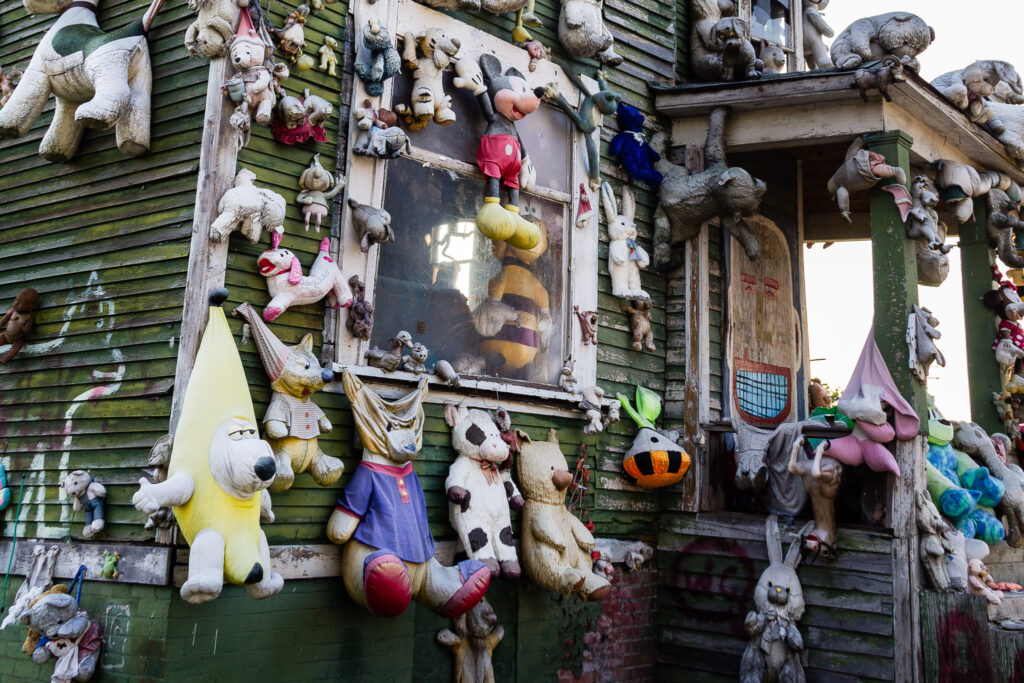
A house falling apart in every direction, but too wild to fix, too broken to forget, and too loud to clean up.
That collection lives here: Heidelberg Street
Flaws stay with me more than anything “perfect” ever has.
It’s simple, imperfection makes better art.
There’s this strange, beautiful thing in something that isn’t quite right. It lives in my mind longer. It grabs at my soul with a life all its own.
And I think we forget that in photography. We forget it online. We forget it in the endless scroll of polished, filtered, “flawless” things.
We try to fix the very thing that makes our work feel alive and yes…
Human.
Which begs the question: Should I fix the flaw?
Should I fix the blemish on the face?
Should I fix the slightly crooked composition?
Should I fix the grain that adds mood to the image?
Should I fix the uneven lighting that makes it feel alive?
Should I fix the motion blur that tells a deeper story?
Should I fix the imperfection that makes it uniquely mine?
Should I fix the flaw?…. Or is the flaw what makes it art?

The One-of-a-Kind Value of Flaws
The cool thing about flaws is that no two are ever exactly the same. Every flaw is, in essence, a one-of-a-kind, or a 1/1, so to speak.
Think about it, if something can be copied endlessly, is it even worth anything?
If you’ve ever watched antique shows or Pawn Stars, you’ve probably heard someone say something like this: “This piece is from [such and such] time period. You can tell because, back then, they didn’t have [modern method], so everything had to be done by hand.”
And this is where something retains value, because it’s imperfect.
You see, the beauty of imperfection lies in its refusal to be replicated.
The beauty of imperfection lies in its refusal to be replicated.
Share on X
The Old Ceiling Lamp (That Almost Got Thrown Away)
The other day we replaced the old lamp ceiling lampshade in my daughter’s room with something a little more girly/kid oriented and a little less grandma.
I asked my wife… “Hey honey, what we should do with the old one?”
She told me to throw it away.
But I felt bad for it. Yes, I felt bad for an old lampshade.
Plus, it’s old, maybe it’s a vintage antique or something?
After a little research I found out that one clue in determining the age of a ceiling light shade is examining the little hole in the middle of the glass. It’s the hole where the bolt goes through, secured by a decorative nut.
If this hole is etched perfectly than it’s probably done in more recent times and mass manufactured.
However, if it’s off center, sort of rough, rather imperfect and not so smooth then you’re probably looking at something a little older.
Something a little less perfect.
Something a human had a little more to say about the final outcome.
And isn’t that what makes something art? The human touch, the imperfection, the story?
Why Imperfect Art Feels More Real
When I think about imperfection, I think of Van Gogh. His brush strokes weren’t clean. They were stormy. Messy. Emotional.
They were alive.
Same with photography. Some of the most striking street photos? Not technically perfect. But full of soul.
Early on, I used to Photoshop everything. Fix the white balance. Straighten the lines. Nuke the grain.
Like, hey dummy, some compositions say more crooked.
That’s me yelling at myself years later.
Because now I look back at some of that work and I feel… nothing.
There’s an emptiness or peculiar kind of hollow feeling in trying to always get it right.
That’s not what I love about photography anymore.
Give me the uneven. The flawed. The stuff that screams I’m human and this is what I saw in this moment, and this is how I captured it.
The Psychology Behind Our Love for Imperfections
Human beings are wired to appreciate uniqueness.
Unique Art, unique writing, a unique voice.
For the most part, we like things that feel different.
Somehow, it feels like we are able to form a deeper emotional connection with things that feel real and unpolished.
Take how AI writes for contrast.
Even though AI can generate accurate content, it often produces misinformation. Some call this an hallucination but I’m not talking about the content.
I’m talking about the almost too perfect tone and structure.
I’m talking about the voice.
It lacks authentic experience, emotion, and it doesn’t feel all that relatable. There’s no voice resonating behind the words with an actual lived experience that makes you relate.
It just doesn’t feel real. It doesn’t feel lived.
AI doesn’t stop there. Everyone with a keyboard is making beautiful pictures now using AI.
When I first started messing around with AI programs like MidJourney, it couldn’t do hands or eyes very well but the new models/versions seemed to advance quickly.
But, for that brief moment, I remember some people embracing the flaws. It was AI’s own little moment of imperfection and artists recognized it.
They began to make collections around the weird hands and they were funny because of how imperfect they were.
But now, as these AI models improve they continue to push towards one ideal and that ideal is perfection.
Everything looks too good, too ideal, flawless, and yet somehow, perfectly fake.
I think as the pursuit for perfection floods our world with flawless images, I believe more photographers will step back from creating unreal, hyper polished photos and instead embrace a more natural, authentic approach.
This idea isn’t new. In fact, there’s a name for it: Wabi-Sabi.
The Wabi-Sabi Way: When the Flaws Become Gold
You can google it but essentially Wabi-Sabi is a Japanese philosophy that finds beauty in imperfection. It celebrates the imperfect, impermanent, and incomplete.
Where AI strives for perfection, Wabi-Sabi embraces all that is flawed, and perhaps all that is considered… wrong.
Have a cracked pot? Perfect, Wabi-Sabi celebrates the cracks in pottery.
And that faded ink on a handwritten note, perfect!
Perhaps most important for us photographers, the grain in a film photograph. Film photographers have learned to embrace it but digital has a ways to go. We still want to kill all that noise as much as possible. It’s just not all that aesthetically pleasing. But, maybe we …. ok, never mind. I don’t know what I’m saying…
Let’s just look at Wabi-Sabi in Practice.
Wabi-Sabi in Practice: In Japanese art they sometimes fix broken pottery with gold. It’s called Kintsugi and instead of hiding the flaw, this process actually highlights it.
This makes the pot even more rare, unique and valuable.
So you see, real beauty isn’t in perfection.
Real beauty is the flaw.
Real beauty is that thing that makes something unique, unrepeatable, and deeply human.
Can AI and Technology Replicate Imperfection?
Now some of you might be thinking, “Yeah, but I can use AI to replicate imperfection. I can just tell it to make it not so perfect.”
I mean, we’ve been doing this forever, trying to imitate imperfection. We have light leak filters, film grain, retro, polaroid, etc.
You name it, we have a filter for every type of imperfection and now we have AI.
AI can help.
This is true, but while artificial intelligence can mimic artistic styles and human creativity, it struggles to replicate the randomness and emotional depth that true imperfections bring.
Real imperfections come from the unpredictable nature of us.
Yes, the human.
Throw in the environment, and even chance itself and you will see that there’s, an emotional depth in flaws that can’t be pre-programmed.
Light leaks, expired film, motion blur, grain, over or underexposure, lens flare, dust, vignetting, soft focus, distortion, and even accidental compositions.
These aren’t just stylistic choices. They’re also the unexpected consequences of living a real human photographer experience.
That’s the difference between an imperfection designed to look real and one that simply is real.
And this isn’t just true in photography.
Imperfection is everywhere and woven into the fabric of life itself.
What Nature Teaches Us About Beauty
Maybe nature has some lessons to teach us. Think about it.
No two leaves are exactly the same right? No mountain peak is perfectly symmetrical, and yet, we recognize the beauty.
Imagine stepping out into the same sunrise every day, or watching the sun go down the same way every time.
The same colors, the same light, the same everything that makes a so-called perfect sunset.
That would be boring right?
Nature gives us the most breathtaking sights, rugged landscapes, asymmetrical flowers, and shifting cloud patterns.
Any Yet, there’s nothing perfect about nature.
Still, somehow it feels so perfect, so real, and so refreshing.
If anything, nature teaches us that imperfection is perfection.
How to Embrace Imperfection in Your Own Creative Work
Instead of chasing perfection, simply run the other way.
Run toward the raw and unfiltered aspects of your work that make it uniquely yours.
For example, if you have a tendency to underexpose your photos maybe your drawn to the dark, moody shadows.
If your continuously overexpose maybe your heart is seeking that light and airy style of photography.
Before hitting the auto button in post and cooking everything to a happy medium maybe take some time to feel the photo out.
Don’t just automatically try to straighten the composition or try to push everything to some preconceived notion of normal.
Instead, think, “what is the story if I leave it like this?”
Final Thoughts – The Flaw Is the Feature
Maybe that’s the real takeaway here. Imperfection isn’t something to fix.
It’s something to recognize, honor, and then maybe just lean into.
The crack in the pottery adds character.
The grain or slightly off composition in the film adds mystery.
It’s all part of the story.
If we keep chasing perfection, we risk sanding down the very edges that make our work (and our lives) interesting.
We risk making everything interchangeable, forgettable, and soulless.
We risk pushing everything into the middle ground, the safe but happy medium.
Is that where you want your art to live?
No, I know it’s not. I know you.
So maybe the next time you’re tempted to “fix” something, ask yourself: Does it really need fixing?
Or is the flaw the very thing that makes this piece unforgettable?
💬 What Did This Post Make You See?
Leave a comment and share what this post made you think, feel, or notice.
👀 NFT Friends
Feel free to drop your public wallet address with your comment… because who knows right…
🖼️ Before Language, After Light
Default Gallery: Featuring recent photography and artwork from creators I’ve collected on Tezos. Updated regularly to reflect the spirit of each post. → View Full Curation on OBJKT
🟢 Currently Open for Submissions
Have a Tezos NFT that fits this post’s theme? Share a link with your comment (link-only posts will get flagged as spam). I may collect or feature it here or in a future post.
Support independent creators. Discover and collect below.
Best Settings for Street Photography
So, what are the best settings for street photography? Honestly… Who Knows. But Also, I Do.

OK, last week, we covered 25 Battle-Tested Street Photography Tips for Beginners. But we didn’t talk about camera settings. So here we are.
Look, if you think there is a one size fit’s all, golden camera settings type formula, then I have bad news for you. It doesn’t really work like that. But then again, it kinda does.
Yeah, I’m already contradicting myself. You’ve been here before, right? Listening to me ramble on and on. Welcome to the inside of my brain, especially when I have had too much coffee. Pull up a chair.
So street photography is weird. You’re the boss of nothing except maybe your camera settings.
The guy with the umbrella, walking past the “It’s Always Sunny in Florida” sign, isn’t going to stop and wait while you figure out your ISO.
The girls not going to stop and go back to where you want her.
And the man is probably angry and doesn’t like his picture taken.
Look, you’re out here with the chaos, and that guy definitely noticed you taking his photo even though you were trying to be all “candid”.
Spoiler Alert: He saw you. He always sees you.
And now, he’s asking if you’re with the government. Good luck explaining ICM to him.
OK, back up, I’m definitely making this personal and these are some of the questions I’ve fielded.
But yeah, settings. The golden settings. That’s why you are here. So, let’s say there were some basic good settings. Let’s talk about those.


1. Shutter Speed: Fast Enough to Freeze Life, But Not Too Fast to Kill the Vibe
So, 1/200 is my safety net. I don’t know what I’m going to be shooting. I usually try to go there and then dial in the rest.
It’s fast enough to freeze movement (unless that guy who didn’t want his photo taken is really mad and animated), but not so fast that I lose the blur I sometimes want.
Yes, you heard that right. Look, blur is not the enemy. Blur reminds us that “time happened here.” Life is blurry, and sometimes, a little motion blur tells a better story than a perfectly sharp image. Try 1/160 or even lower. Let’s let blur be a character in this story.
Or not. Sometimes, freezing the moment is imperative to the story you are trying to create. In that case, you’re looking at something like 1/500 or higher.
2. Aperture: f/8 and Be There. Or f/2 and Make It Weird.
A lot of street photographers swear by f/8. It’s got that “just be there, everything is in focus so I don’t have to think about it” energy. I like that, especially on the street where things happen fast.
f/8 offers me a little room for error. Not only that, street photography is often as much about the environment as it is the subject. Sometimes, if you’re lucky, multiple layers or elements within the scene are interesting. You want to capture that.
But wide open? Oh man. f/2. f/1.4. It’s a little less documentary and a little more about conveying emotions. In this sense, you’re isolating and establishing an intimacy with the subject’s mood.
But, shallow DOF can be a tricky way to shoot if your subject is moving, and even harder if you’re moving. Plus, everything is happening in the blink of an eye. There’s no, “let’s try that again”.
You either got the shot, or you have a nice shot of the subject’s shoulder.
Either way, I commend you for doing it your way because that is the real golden setting. Anyone telling you there is only one way to do something is full of themselves.
What if Saul Leiter had ignored his instincts and played it safe?
Imagine he stuck to black and white photography just because everyone around him said that’s what “serious” photographers do?
Instead, today, he is known as an early pioneer of color street photography.
So yeah, f/8 and be there, or f/2 and make it weird. It doesn’t matter as long as it speaks to you. That’s the only setting worth chasing.
3. ISO: As Low As You Can Go, As High As You Need
Street Photography isn’t about perfection.
Sometimes the light sucks but you’re out there anyway.
Sometimes, the only thing lighting your shot is a neon sign from a vape shop and your own stubborn determination.
Push that ISO. You can always reduce noise in post if you want.
Grain is not failure, it’s texture, emotion, and grit.
That said, if you can keep it at 400 or under in daylight, do it. If it creeps to 3200 or higher, embrace the noise.
Just tell yourself it adds character.
You’ll be fine.
This Blog Runs on Coffee, Photos, and Your Support
I mint select images as NFTs and list the gear I use. Collecting or shopping through my links is like buying the blog a coffee. ☕ 🧡
4. Focus Mode: Manual If You Hate Yourself. Auto If You Like Photos.
I respect manual focus purists so much. You’re the people who still hand-grind their coffee every morning with a cast iron burr mill (Amazon affiliate link), but of the photography world.
We love you!
But out here, in the city, with cars zooming, people screaming at each other, and your subject about to duck for cover, you have to be fast.
What’s fast?
Back Button Continuous autofocus with face/eye detection.
OK, OK, I hear you. What if you don’t have a Canon R5 (Amazon affiliate link) or a camera body with all this new-age sorcery?
If you’ve got an older body or just a simpler system, try single-point autofocus. You can move the focus point around (if you’ve got time and joystick skills), or just use the center point, focus, and recompose.
I lived on focus-and-recompose for years with my Canon 60D. It works.
Just one thing: if you’re using continuous autofocus, the camera will keep trying to refocus the whole time you’re reframing, which means your locked focus becomes not-so-locked. To avoid that, either switch to One Shot, or let go of the back button after you’ve locked focus but before you move the frame. That freezes the focus where you want it.
OK, OK, I hear you. Someone in the back is yelling Zone Focus. And yes, if you’re feeling old school and want to pretend you’re in a 1960s photojournalism documentary, try Zone Focus.
I’m just kidding! All these methods work. Pick one that lets you think less about focusing and more about shooting.
5. Shooting Mode: Raw. Always Raw. Unless You’re Wild.
JPEG shooters, I love you, you little rebels. But if you’re asking me what I do? Raw all day. It gives you wiggle room. Breathing space. The freedom to fix your mistakes later when you realize your white balance was set to “cursed fluorescent office space” the whole time.
Am I the only one who made that mistake?
Look, I get it, you’re hardcore. Sometimes, constraints make you sharper. If you like the commitment of JPEG, go for it. Just own it. No shame.
No, I didn’t say that. Seriously, switch to RAW right now. You’re a serious photographer. Stop F#@ing around!
Bonus: What Shooting Mode Should You Use?
My default is Manual mode for almost everything.
But, when on the street, I find myself more and more using Aperture Priority. It’s just faster. I pick the aperture, and the camera picks the shutter speed. If I want a bit more control, I’ll use exposure compensation to nudge the exposure a little darker (usually).
Manual mode is for when you’re feeling in full control of your life (who are you?). But unless you’re in consistent lighting or doing something specific, it’s easy to miss a moment while fiddling with settings.
Shutter Priority? Eh. You could, but if you care more about depth of field (and you probably do in street), Aperture Priority gives you better results most of the time.
Program Mode? Honestly, I don’t even know what this mode does. I think it’s auto, but you still have control over ISO. I don’t use this mode.
Full Auto? You know what. I’m not even mad. If it gets you out there shooting, go for it. But one day, your future self will thank you for learning to do more.
Final Thoughts? None. Just Go Shoot.
Honestly, the best setting is the one that lets you get the shot. If you’re so wrapped up in settings, you miss the moments in between moments. You miss the good stuff, and that’s the real tragedy.
Set your camera up so it’s ready to go. Adjust when needed. Trust your gut. And when in doubt? Take the shot. Even if it’s slightly blurry. Even if your ISO is screaming. Even if you’re not sure it’s “good.”
The street doesn’t care about perfection. It cares that you showed up.
Want to talk photography or roast my life choices? That’s a coffee pun. You know where to find me. Or don’t. Go shoot. Come back sweaty and a little uncertain about everything except the fact that you love this chaotic little ritual. That’s enough.
Catch you on the street.
💬 What Did This Post Make You See?
Leave a comment and share what this post made you think, feel, or notice.
👀 NFT Friends
Feel free to drop your public wallet address with your comment… because who knows right…
🖼️ Before Language, After Light
Default Gallery: Featuring recent photography and artwork from creators I’ve collected on Tezos. Updated regularly to reflect the spirit of each post. → View Full Curation on OBJKT
🟢 Currently Open for Submissions
Have a Tezos NFT that fits this post’s theme? Share a link with your comment (link-only posts will get flagged as spam). I may collect or feature it here or in a future post.
Support independent creators. Discover and collect below.
You’re here because something about street photography pulls at you. The rawness. The unscripted moments. The way light catches some girl’s jacket as she disappears around a corner. This post isn’t a rulebook. We don’t do rules here.
These street photography tips are just my own clumsy notes from the street. Things I’ve noticed while out chasing stories with a camera.
This post is not about camera settings. For that: What Are the Best Settings for Street Photography? 5 Golden Settings
Let me tell you something first. I don’t live in a big city and I feel like I’m a level 1 street photographer.
It’s hard.
When I started photographing strangers on the street, I was a mess. I was afraid to point the camera at people. Half my shots were crooked as I would try to do it fast.
Sneaky was another option. You know, don’t mind me, I’m just photographing this mailbox that happens to be next to this guy reading a newspaper and smoking a cigar.
Usually, behind all these nerves, the results were terrible. But something about it hooked me.
So, obviously this post isn’t going to make you a master. I’m still learning too but I’ve made many practical observations while out and about shooting. Things that maybe you will be able to relate with.
For example, take Tip#9: Don’t Look at People. Wait what?
Read on my friend, I think these street photography tips will help you skip some of the weird insecurity loops and rookie mistakes I made.
That way, you can get to the heart of street photography… finding stories and seeing the world differently.
So grab your coffee and let’s get to it.

25 Street Photography Tips
1. Use the camera you already have
Seriously. You’re just procrastinating. You’re ready to start today. Street photography isn’t about gear. It’s about finding stories. If your camera turns on and takes photos, that’s enough. Your phone. Your beat-up DSLR. Even your point-and-shoot from 2008. Use what you’ve got. Start walking.
Fine, if you insist: What is the Best Camera for Beginners?
2. Start with curiosity, not perfection
You don’t need a plan. You don’t need a shot list. You need curiosity. That’s it. Go out wondering what might happen if you walked left instead of right. If you followed the guy in the blue raincoat for a block. If you went down the alley. If you sat in one spot for 20 minutes.
Don’t worry about perfect composition or getting “keepers.” Your first 10,000 shots are for you. Be curious. You’re learning to see.
3. Blend in and slow down
The faster you move, the more you stand out. Not only that, but you’re also going to miss stuff. Slow down. Pretend you belong wherever you are (even if you’re quietly freaking out). Move and dress like a local, and nobody will pay you much attention.
Street photography is 50% psychology. Don’t act weird, or people will feel weird about you. Remember, you belong here.
4. Know your settings before you leave the house
I’m not going to lie, I have fumbled with the dials once or twice, and the moment was gone. Things happen fast on the street.
I suggest you go with aperture priority (f/8 is solid), set ISO to auto with a max, and choose your shutter minimum. Then forget about gear and start looking.
This way, you will always come away with some version of the shot. If you come across something that affords you the time to play with settings, then by all means, adjust to your vision.
5. Shoot with a prime lens for freedom
I like primes. They strip down the decisions you have to make so you can focus more on moments.
Give me a 50mm and I’m happy. Zoom lenses make you lazy. Look at you, just standing there and twisting.
Prime lenses make you move. They force you to walk, lean, duck. A 35mm or 50mm on a crop or full-frame body is magic. It matches your natural perspective.
Many people prefer the wider 35mm for street photography, but I’m happy with the 50mm. Always do you. Don’t listen to trends. Heck, Saul Leiter frequently used a 150mm.
6. Find your rhythm before chasing results
When you’re new, you’ll either shoot way too much or not at all. That’s normal. But over time, find your rhythm. Maybe you shoot best in the morning. Or after work. Maybe it takes you 30 minutes to start seeing. That’s me. When I first start shooting, it takes my photographer brain a minute to kick in.
There’s no right tempo. But once you find yours, respect it.
7. Use light like a character
Remember, God is Light, and light tells stories. Instead of looking for something interesting to shoot, find interesting light. Let the light guide you.
Light is always the leading character in photography.
Good light makes boring things beautiful. Harsh shadows. Golden hour. Reflections on glass. Silhouettes at sunset. If the light’s interesting, almost anything in it will be too.
8. Get close. Then get a little closer.
This one’s scary. Getting close to people is always scary. You can crop, sure. But proximity adds tension, intimacy, and honesty.
Try this: the next time you’re nervous, take one step forward instead of zooming in. That step is the difference between a photo of a scene and a photo that makes someone feel something.

9. Don’t Look at People
Wait, this one makes no sense. What I mean is, avoid eye contact. Just trust me on this one.
It’s weirder if you take someone’s photo and then immediately after, lower your camera and share a moment. Avoid locking eye contact. Look past them, like just maybe there is something beyond this immediate orbit that has grabbed your attention.
10. Stay Inconspicuous: Use your Flip Screen
If your camera has a flip-out screen that swivels, use it. Not just because it’s convenient, but because it’s less confrontational.
You can shoot from the hip without, you know, actually shooting from the hip. You can tilt it up and pretend you’re adjusting settings.
This helps with tip #9 also, as you can aim at someone while looking down at your screen instead of at them. It just feels less intense for everyone involved.
It’s got big Vivian Maier energy. Quiet. Observant. Almost invisible.
People don’t react the same way when you’re not holding a camera to your face. They stay in their moment. They forget you exist. And that’s when the best stuff happens.
Try it next time. Angle the screen. Look at your camera instead of your subject. It feels less intrusive than bringing your camera to your eye.
11. Be invisible, but don’t hide
You’re not doing anything wrong. Be discreet, but don’t act like you’re sneaking around. It’ll make people nervous. Instead, act like you belong. Smile if someone notices. Be cool.
Most people don’t care. Or they think you’re weird but in a good, charming kind of way.
“Hey You, Photographer Guy, Take our Photo”…. that’s how this photo happened.

12. Know the Laws, Respect Your Subject
You can legally photograph most things in public spaces (at least in the U.S.), but legal doesn’t always mean welcome. Read the room. Be human first, weird photographer second.
Ethics in street photography is a big, messy topic. But here’s the simplest rule I follow:
If someone looks vulnerable or hurt, I don’t shoot. If I shoot and they notice and don’t like it, I delete. If someone says “please don’t,” I say “of course.”
You can still be bold and kind.
This Blog Runs on Coffee, Photos, and Your Support
I mint select images as NFTs and list the gear I use. Collecting or shopping through my links is like buying the blog a coffee. ☕ 🧡
13. Be ready for the “what are you doing?” moment
Eventually, someone will ask. Hopefully, they didn’t fit a swear word that begins with an F into that question. If they did, that probably means they’re starting off hot.
Either way, be kind. Smile. Tell them you’re practicing street photography. Most people aren’t mad, they’re just curious. You don’t have to explain everything. Respect people’s space. If someone asks you to delete a photo, do it.
14. If it feels awkward, you’re doing it right
OK, yes, a lot of these tips have been about feeling less weird.
But look, Street Photography is kind of a weird hobby. Right?
You’re following strangers, lingering in alleys, shooting moments that don’t belong to you. It should feel a little strange. Right?
Embrace the awkwardness. It means you’re stepping into the unknown, which is where all the good stuff lives.
15. Use alleys, corners, reflections, shadows
Architecture is your playground. Corners frame. Shadows hide. Reflections twist reality. Alleys isolate.
Look beyond people. Look at how the environment tells a story, sometimes without anyone in the frame.
Adding these elements to your compositions will ground you in the hobby of photography. You will feel less like you’re just out hunting for the next unsuspecting subject and more like a photographer with intention.


16. Shoot through things to add texture
A fence. A leaf. A dirty or rain-covered window. A plastic bag. Shoot through them. It adds layers and a sense of voyeurism that fits the vibe of street work beautifully.
Street photography is half-real, half-magic trick. You’re not just showing the world as it is, but how you feel and see it.
A window covered with raindrops interests me more than a photograph of a famous person. » — Saul Leiter.
Share on X


17. Capture gesture, not just faces
Look for those little gestures that make us human. Someone waving to someone. Someone jumping with excitement. A gesture is often more powerful than facial expression. A photo of someone scratching their head or shielding their eyes from the sun can say more than a smile ever will.
I would have liked to capture this photo from a different angle but you get the idea.

18. Wait for the layers to line up
Patience pays off. Sometimes I stand in one spot for 10 minutes just waiting for someone to walk into the right light or for the background to clear.
Street photography is less “hunting” and more “fishing.” Pick your spot and wait for the bite.
The first photo below (left) has beautiful light, but it’s missing those extra layers. There’s no person, emotion, interaction, or interesting thing happening. We need these extra layers to turn good light into a story worth telling.
The second photo (right) is more about waiting for the different stories to line up.


19. Mix chaos and control
Embrace the chaos. It’s OK. Let some frames be messy. Let others be composed. Contrasting moments are the point. Life isn’t always symmetrical and rule-of-thirds-perfect. Let your photos breathe a little. Give yourself a break.
20. Shoot in Series
You’ll be tempted to hunt for “the one shot.” Try making a mini-series instead. Three people doing one thing. Five signs of morning routines. A sequence of shadows growing as the day passes.
A series gives you structure. It also helps your brain stop thinking every shot needs to be a masterpiece. Instead, an image can work if it complements the story you’re trying to tell.
21. Don’t chimp (at least not right away)
You’ll want to check your LCD after every shot. Try not to. Stay in the moment. Let the flow carry you. Reviewing photos mid-shoot can kill momentum.
Instead, do a full edit dump when you’re back home, with coffee, music or a bored cat on your lap.
22. Collect moments, not approvals
Don’t chase likes. Don’t try to impress other photographers. Let street photography be yours. Private. Messy. Odd. Beautiful.
Shoot for you, first. If others connect with it, great. If not, you’ve still captured something honest.
23. Avoid the tourist gaze
Don’t just shoot what everyone else does. Instead of pointing your lens at the skyline or a mural, try photographing the people looking at the mural. Or the guy fixing his shoelaces next to it. Capture how people interact with the city, not just the city itself.
24. Get lost more often
Some of my favorite shots came from getting lost on purpose. No map. No plan. Just walking until the world felt different.
Let yourself wander. Let the city surprise you. Street photography isn’t about conquering the streets. It’s about noticing them.
25. Study your photos like a scientist
You’re at home now, hopefully you have some coffee. It’s time to go through your shots like a mad scientist.
What worked? What didn’t? What do you keep doing? What are you afraid to shoot?
Self-critique is how you grow. And be honest, not harsh. You’re not judging your worth. You’re studying your patterns.
Have any Street Photography Tips?
That’s all I got. Maybe you knew most of these. Maybe you’ll forget most of these. Maybe you need to hear from other street photographers already on the street. In the post below, I asked 12 different photographers to share their #1 real-world tip.
How to Get Better at Street Photography – 12 Tips From the Street
Also, if you need camera settings: What Are the Best Settings for Street Photography? 5 Golden Settings
Anyway, it’s time to go shoot. Hit the street. So, grab your camera and start walking.
💬 What Did This Post Make You See?
Leave a comment and share what this post made you think, feel, or notice.
👀 NFT Friends
Feel free to drop your public wallet address with your comment… because who knows right…
🖼️ Before Language, After Light
Default Gallery: Featuring recent photography and artwork from creators I’ve collected on Tezos. Updated regularly to reflect the spirit of each post. → View Full Curation on OBJKT
🟢 Currently Open for Submissions
Have a Tezos NFT that fits this post’s theme? Share a link with your comment (link-only posts will get flagged as spam). I may collect or feature it here or in a future post.
Support independent creators. Discover and collect below.
The Big Question: Can AI Art Ever Really Be Art?
Can AI Create True Art or Just a Clever Imitation?
AI-generated art is becoming more sophisticated, but does that mean it can replace human creativity?
No doubt, AI art can generate some visually stunning work. Nobody will argue that AI can make pretty things.
But is AI Art really Art?
This debate is heating up, with some people refusing to even call AI creations “art” at all.
And don’t dare say “AI photography” around certain crowds. That’s pure sacrilege.
I don’t take it too seriously as long as you’re not trying to pass if off as photography.
Like to me, “AI photography” is like “AI painting”. You used AI and made a thing to resemble said art from.
As long as you’re not trying to mislead anyone and we know it’s AI then who cares?
Well some do. They don’t even want you to put the words AI and photography in the same sentence.
Meanwhile, others have embraced AI fully claiming that it is just another tool in the artist’s toolbox.
Me?
My relationship with AI is…
Complicated.
Let’s just say I’ve experimented… call it research. Most of the images you find in this post are from my collection: 101 Experiments on OBJKT.
In this post I will look at both camps and will be exploring the difference between AI-generated art and human-created art.
The following 3 images are straight out of ChatGPT, minimum effort
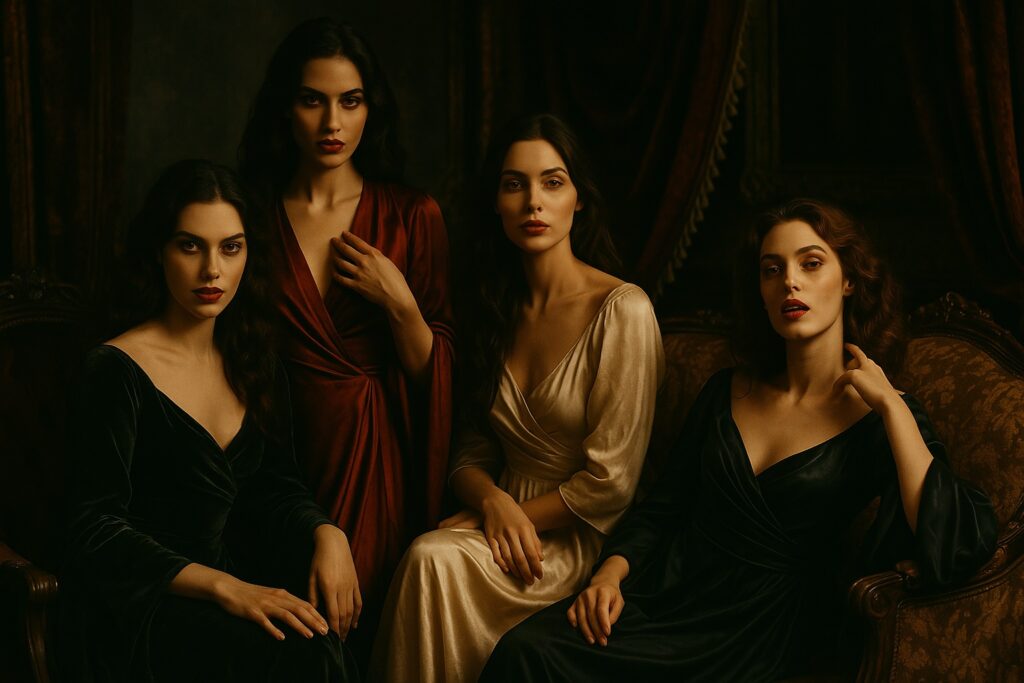
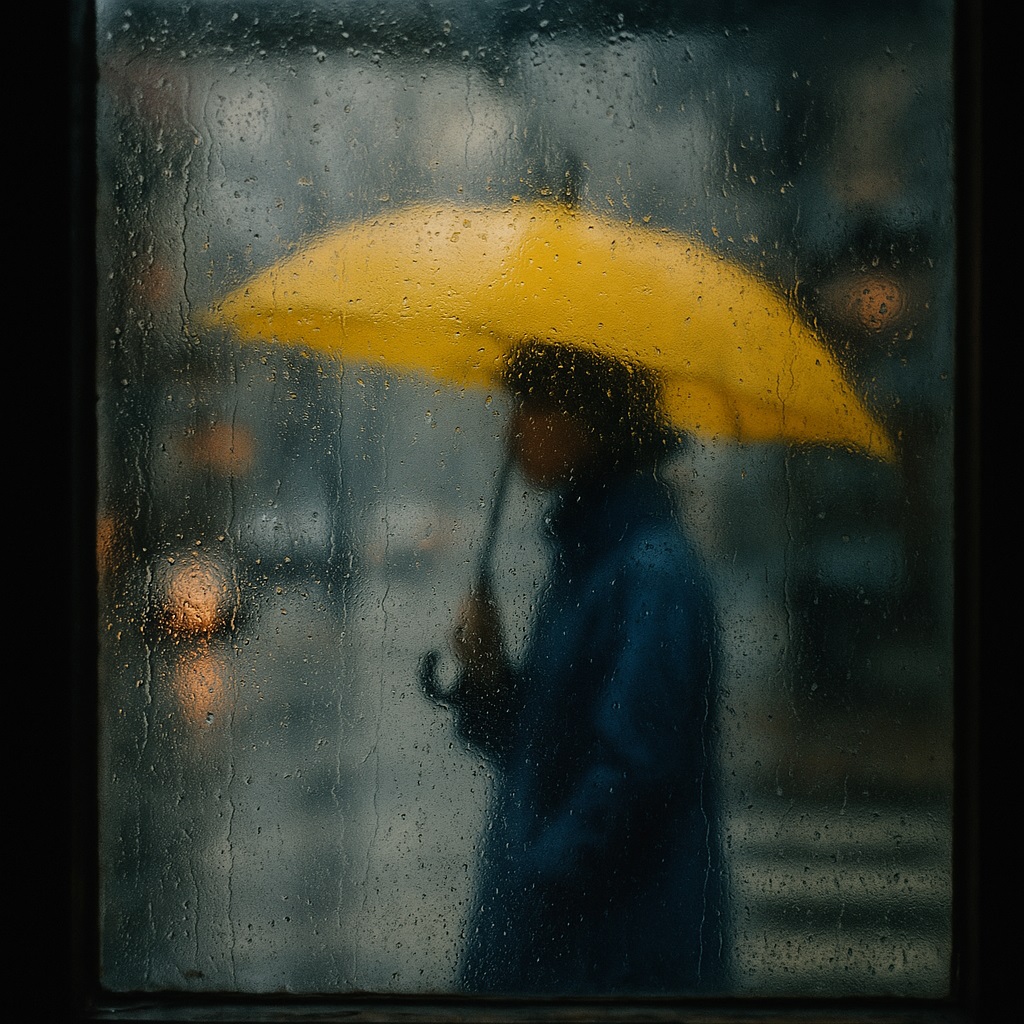
How AI Generates Art
How is AI art created?
Alright, so first I want to say I’m not an AI expert. I don’t fully understand it all myself. All I know that it uses some complex algorithms that analyzes large amounts of datasets.
It then utilizes that information and pattern recognition to create an image based on your prompts.
I know, it sounds kind of mathy but stay with me, because this is where it gets a little fuzzy.
I am led to believe that AI isn’t directly copying in the way a human might trace or plagiarize an artwork.
Instead, it learns patterns, styles, and structures from the work it trained on in the dataset of existing images.
Then it generates something new based on what it has “seen.”
The AI Art Debate – What’s the Controversy over AI art?
This is also where things get very controversial because a lot of AI models have been trained on publicly available images scraped from the internet.
Everything from paintings and photography to illustrations, without the original artists giving consent.
For this reason, I can relate to why these artists might be upset.
Like imagine spending decades of your life developing a unique artistic voice, your style, and then a program scrapes all the data and creates a style based on your work alone.
I think most of these public AI programs are created from a large range of differing work but who is to stop someone from creating a AI program based solely around you!
And then, just to add insult to injury. They package it, sell it, and profit from it.
Meanwhile, you get nothing and have no control over it while everyone and anybody can type in a few words and generate a completely new work that is very similar to your body of work.
Soon, your unique style is drowned in a flood of AI-generated imitations, each one growing more refined at replicating your work.
Remember this post I wrote: Can AI Really Copy Artistic Style? I Gave It a Shot
Yeah, it was kind of a controversial experiment.
But guess what. The concern isn’t just some “what if?” experiment.
It’s already a reality.
Just Google “Greg Rutkowski AI art” or click through to this article: “This artist is dominating AI-generated art. And he’s not happy about it.
So as you can see, a lot of traditional artists are not happy about AI and with good reason.
This Blog Runs on Coffee, Photos, and Your Support
I mint select images as NFTs and list the gear I use. Collecting or shopping through my links is like buying the blog a coffee. ☕ 🧡
Pro-AI Supporters Argument
Now, AI supporters will argue, AI is just another tool and humans also learn by imitation.
This is true.
Humans learn by imitation but only through years of effort, practice, and doubting ourselves.
We don’t just copy.
We interpret.
We adapt.
We fuse our own lived experiences, emotions, and perspectives into what we create.
Eventually, all this, blends into something more personal.
AI, on the other hand, doesn’t learn like we do. It doesn’t struggle, experiment, or evolve with personal insight.
It just analyzes data and regurgitates patterns.
Now you might say, but the lived experience is coming through my use of the AI tool.
And sure, to an extent. But is guiding a machine the same as creating from experience?
Is it the same as creating from a skill that took years to develop? You don’t just learn something overnight. It takes years and years to refine a technique.
With AI, you can create something that looks amazing and visually appealing in less than 10 minutes after first picking up the tool.
Now to be fair, not everyone’s just typing in “cyberpunk Panda in Tokyo” and calling it a day. I always try to add my touch, add some photography textures, adjust the light, whatever. I try to add me.
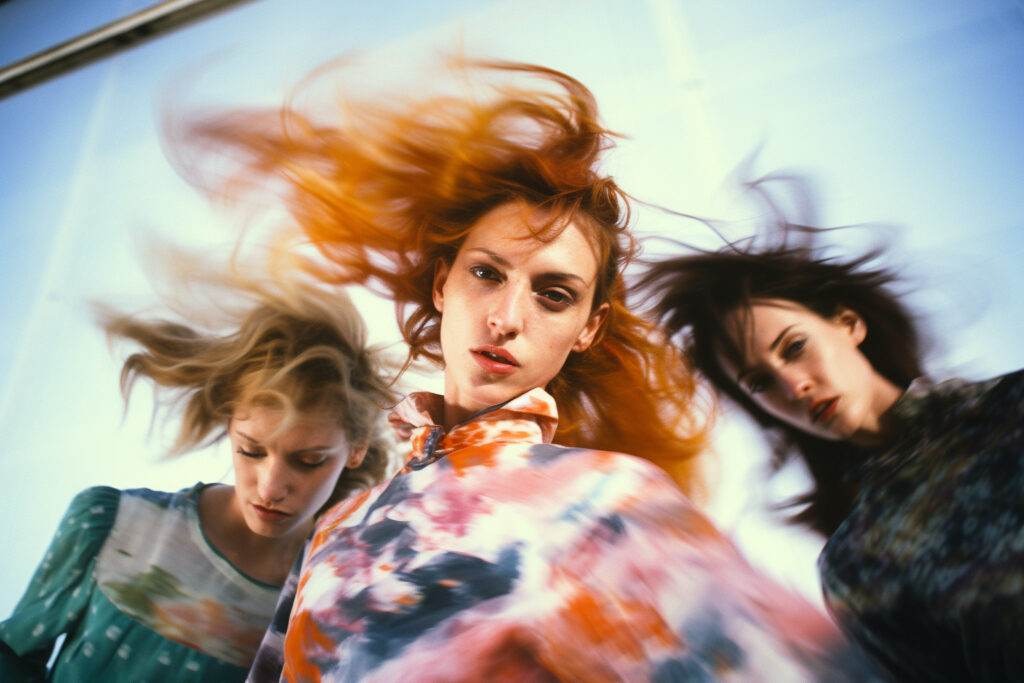
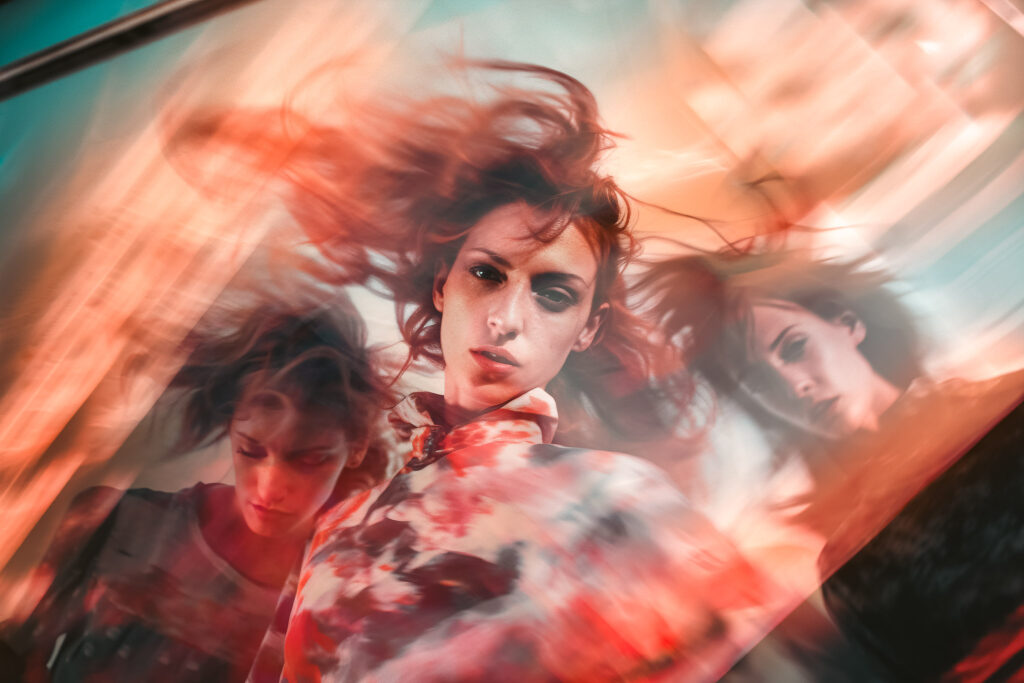
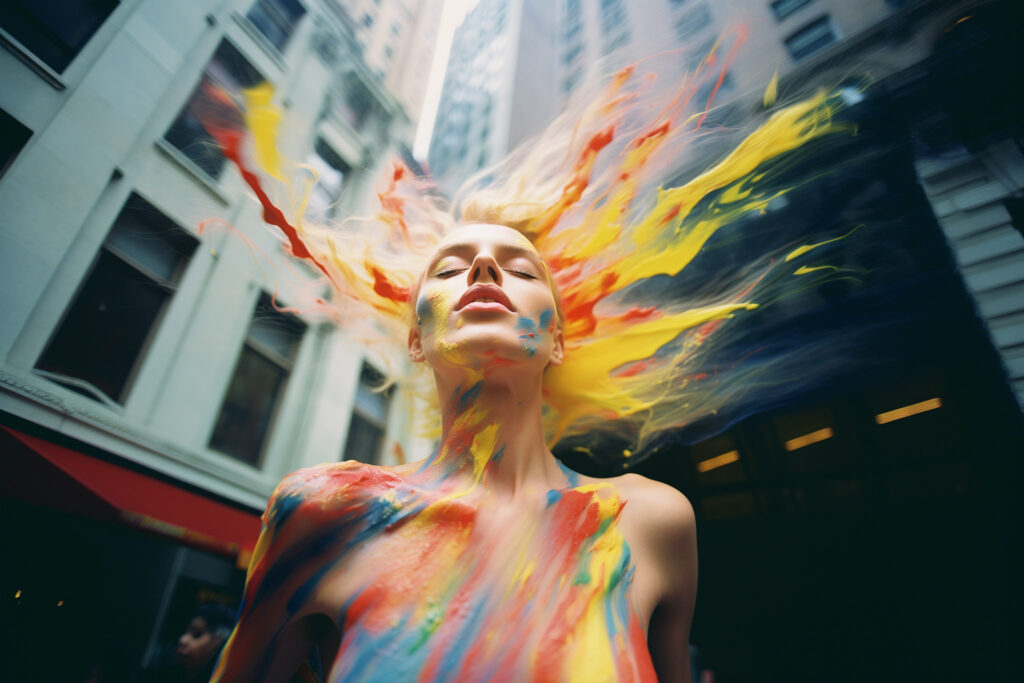
Some people go even deeper. They’re pushing boundaries that take serious time and effort to master. They’re training their own models or fine-tuning AI on custom datasets to build something truly personal.
That takes time, practice, and creative intention.
I don’t know, maybe in all this work it can start to feel like yours?
That’s the question I keep tripping over.
I mean, you can input your ideas, tweak the settings or whatever, but at the end of the day, the AI is doing the heavy lifting.
It’s also the only tool that someone can just hand you their prompt, and you will be able to get results very close to what they are achieving.
AI is generating the visuals.
And that changes the relationship between the creator and the creation.
Are You an Artist or a Curator?
Here’s a question that stings a little:
If you generate a prompt and pick your favorite result, is that creating or curating?
Because that’s what I feel like when I’m using AI.
I’m not saying curation isn’t creative. It absolutely can be. But it’s different.
When I go out to shoot photos, I don’t know what I’ll get. I’m reacting to light, weather, emotion, and chance. I make choices in the moment. I mess up. I adjust. I get lucky.
The result? Something that’s tied to me in a way I can’t replicate.
With AI, I felt like I was borrowing. That’s the best word I can think of. It felt borrowed.
I’m not saying you can’t tell an interesting story by curating the right set of images. You definitely can and there is an art to that.
But at the end of the day, do you want to be a creator, or a curator?
I know, that was harsh wasn’t it.
But I can’t help it. I’m big on the human touch.
The Human Touch – Why Emotion and Experience Matter in Art
Every brushstroke, lyric, or photograph tells a story shaped by the artist’s personal journey, emotions, and unique perspective.
I talked about this in the post, “Photography Isn’t Just What You See, It’s What You Feel”
It’s the reason why me and you could take the same walk, in the same place, at the same time and moment, and come away with a completely unique and different set of photos.
We could take the same painting class and come away with a completely distinct and unique style.
But if I gave you the name of an AI program and the exact same prompt, I used to generate a text-based image, you’d end up with something very similar. Not identical, but close.
Isn’t that just a recipe then?
You see, where AI is relying on the existence of repeatable patterns, the human touch is one of unpredictability, perspective and a lived experience.
Which brings us to the soul of art…

The Soul of Art
“AI Art has no Soul!”
You hear or see this comment a lot about AI art.
Then, right on cue, you see someone posting some AI art with the caption, “and they say AI art has no soul” usually accompanied by some generic, soulless creation straight from the bot’s mouth.
Art is more than just aesthetics. It’s more than a pretty picture or something that looks unbelievably realistic, amazing or fantastical.
It’s about meaning and intent.
It’s about the connection between the artist and the audience, where the meaning behind the work is just as important as the work itself.
It’s about expressing emotions, telling stories, and reflecting the depth of humanity that AI simply can’t feel or understand.
It’s about the little imperfections. The brushstrokes, the hesitations, and yes, as Bob Ross would say, the happy accidents.
That’s what makes art feel alive and uniquely human.
It’s about a lived experience.
A memory.
Failing.
Self-Doubt.
Making Choices.
Perseverance.
Acceptance.
Nostalgia.
A dream.
I think that’s what is meant when they say AI may mimic art, but it can’t replicate the soul behind it.
And that’s why AI art will always lack something essential.
The personal fulfillment that comes from creating, struggling, and growing as an artist.
That is the true measure of a soul.
AI as a Creative Tool, Not a Replacement for Artists
I’ve said a lot of disparaging things about AI art.
I’ve questioned it, challenged it, and overall, have been pretty critical.
Still, I’ve used it.
And I had a lot of fun.
Heck, I even had an AI piece displayed at NFTNYC 2024. I was proud, kind of. I even told some people.
But secretly, I wished it were my photography being showcased.
But that feeling didn’t stop me from using AI again.
I even completed a whole series on Rodeo.club called Are You OK?
This series featured groups of people staring down at you, as if you were on the ground, asking… Are you OK?
So… Are you OK? Now that I’ve shared all these negative feelings about AI art?
Of course, you are.
I’m just one person, shaped by my own experiences and opinions.
This is my relationship with AI, Photography, and Art.
But am I OK?
Sure, I guess.
But something’s still missing…
No matter what I created with these programs, no matter how impressive it looked or how much I altered it to make it my own, somethings always missing.
The sense of creative ownership and fulfillment just isn’t there.
It never felt like my photography, where every shot represents a real moment in time. Something genuine, something I could stand behind and call mine.
It just felt rather empty.
Like it was borrowed rather than created. Like I had orchestrated something interesting but never truly toiled in the process.
With photography, there’s a connection, a memory tied to the moment I took the photo.
The camera in my hands, who I was with, where I was. All the decisions I had to make in the moment.
There’s intent, experience, and a piece of me in every frame.
But with AI, that connection just felt absent.
No matter how much I guided the process, it always felt like I was just choosing from a set of preexisting images.
And that’s the thing. Art isn’t just about the final image.
It’s about how it came to be.
The struggles and choices.
Learning.
Failing.
Succeeding.
That’s where the soul of art lives and I think I need to touch this place to feel complete.
I think a lot of artists do.
Below, an original AI image prompt result, with 3 variations created in Photoshop. My attempt to toil in the process and gain some sense of ownership.
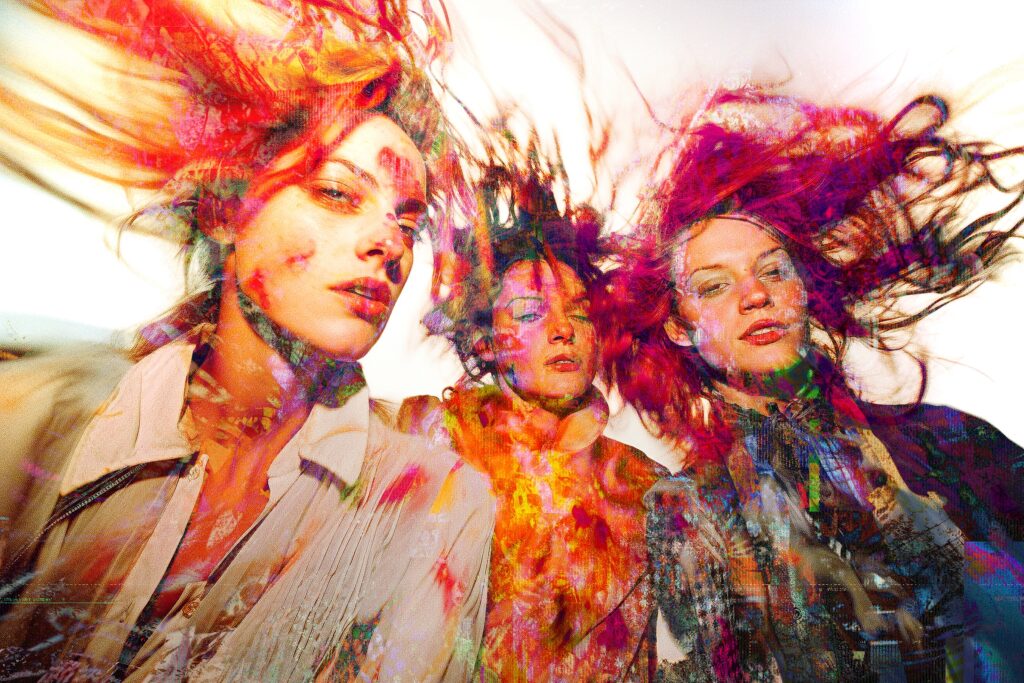
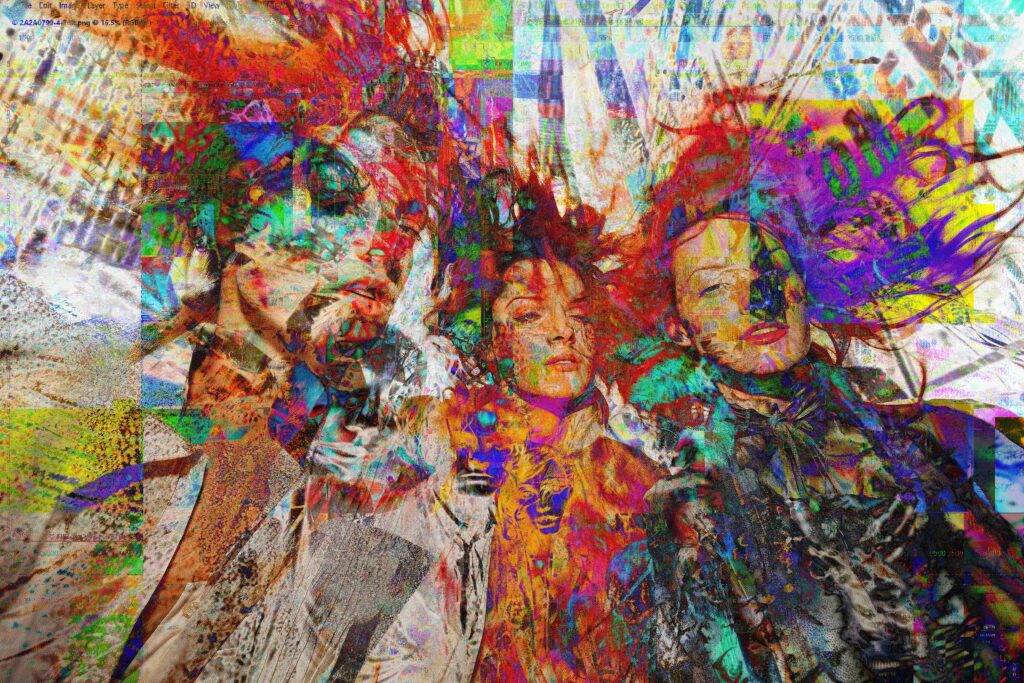
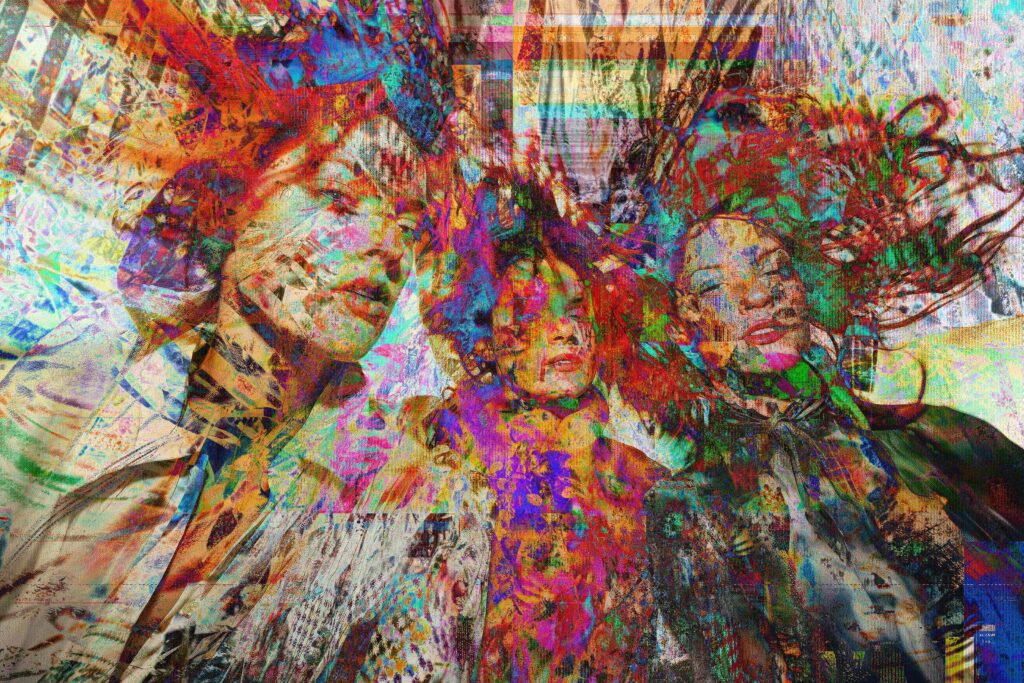
Will AI Art Replace Real Art?
If your sitting there wondering: Is AI Art a Threat to Artists? then you have to approach it from two sides. My immediate answer is no. Not in the way that people will just stop doing art and choose the easy path every time.
Artists live for the process, their process.
That’s why you still have film photography alive and well in the digital age.
People that have the artists spirit will choose their path every time. Something that sings to their soul.
Maybe it’s AI art, or film photography, digital photography, writing, painting, drawing, woodworking, sculpting, leaf art, or making art out of trash.
Art isn’t just about the end result, it’s about the process.
Will AI Art take jobs from real artists?
Yeah, no doubt about it. Individuals and Businesses will lean more on AI when it can save them money. I don’t think there is any question about it.
Startup needs a logo. Anyone with a tiny bit of experience using AI will just generate it instead of finding someone on Fiverr to do it for a hundred bucks.
AI is going to take some jobs but there will always be people who don’t want to bother. They trust someone else to do it.
Someone with a vision bigger than theirs.
An artist.
Final Thoughts – Is AI Art really Art?
I’m not saying AI art doesn’t have its place.
I’ve used it. It can be fun to use, and Yes, you absolutely can curate a story, idea or narrative using AI.
AI is such a unique creative tool. It opens so many new possibilities for expression while lending a visual medium and voice to virtually anyone.
But this is my truth.
I’m not sure it can ever replace the artist or the journey it takes to feel like one.
At least not for me, but maybe you feel differently.
And maybe that’s the heart of it.
I’m not here to gatekeep what counts as art. I’m not even saying AI-generated work can’t move you or mean something. It absolutely can.
But for me, it’s not just about what gets made. It’s about how it gets made. The years of doubt and taking shitty photos over and over again and thinking, god I suck, am I ever going to get better?
I think that’s the part I’m missing when I just run a prompt and wait to see what I get.
Still, if AI helps you tell your story, if it gives you a different feeling entirely, then I think that’s pretty cool.
I just know that I need the mess. I need the 10,000 bad photos. I need the me in the art.
Maybe that’s not the only way to be an artist anymore.
But it’s mine.
💬 Do You Consider AI Art Art?
💬 What Did This Post Make You See?
Leave a comment and share what this post made you think, feel, or notice.
🖼️ Before Language, After Light
Default Gallery: Featuring recent photography and artwork from creators I’ve collected on Tezos. Updated regularly to reflect the spirit of each post. → View Full Curation on OBJKT
🟢 Currently Open for Submissions
Have a Tezos NFT that fits this post’s theme? Share a link with your comment (link-only posts will get flagged as spam). I may collect or feature it here or in a future post.
Support independent creators. Discover and collect below.
How to Build a Photography Habit
Some days you pick up the camera like it’s a second limb. Other days it sits untouched, collecting dust and guilt.
If you’ve ever felt like you should be shooting more but just…aren’t, this post is for you.
We’re not talking about forcing it. This isn’t a “Just do It” commercial.
No, we’re talking about how to build a photography habit that feels good and hopefully sticks. One that fits into your actual life, not the imaginary perfect schedule you keep rewriting every Sunday night after downloading yet another day planner guide.
Let me tell you what happened the last time I tried to make a photography “routine.”
I printed out this color-coded weekly planner. Blocked out all the time. Even wrote little motivational quotes in the margins.
Monday: Photo walk, get out there lazy ass.
Tuesday: Experiment like you’re Dexter from Dexter’s Laboratory. You love that cartoon.
Wednesday: Edit one photo in the backlog and post it, You got this!
You get it.
And by Thursday, I’d already skipped two. Then the shame spiral. Then the “well I guess I suck at this” moment.
OK, maybe the shame wasn’t that bad but do you know what I mean?
Eventually, I had to stop trying to make photography this rigid thing I had to accomplish and start letting it show up more casually. Like having a cup of coffee or taking out the trash.
But, you know, way more fun than the trash. At least I hope.
That’s what this post is about: how to make a photo habit that’s more like that morning cup of coffee… and less like failing at a New Year’s resolution.

Why You Don’t Need Motivation – You Need a System
Waiting until you feel “inspired” is a trap.
Motivation is flighty. Habits are dependable.
What works? Creating low-barrier systems. Things that remove friction instead of demanding effort. For example:
- Leave your camera by the door. If you’re brave, I would say in the car but better lock the doors and not live in my neighborhood…
- Start a private photo-a-day project, no pressure to share, this is for you, just shoot one photo a day.
- Pick one location you can shoot weekly (same bench, same alley, same path)
Many photographers don’t shoot because they’re always inspired. They shoot because they’ve made it easy to show up.
Start Small and Make It Ridiculously Easy
If the goal is “go outside and take an award-winning photo,” your brain will rebel. Not today, it will say. Let’s binge Netflix instead.
Try this instead:
- Just step outside with your camera ONCE a day
- Just take ONE photo on your phone while walking to the store
- Just post ONE image from your archive you’ve never shared
Lower the bar. Then lower it again.
I’ve lowered the bar so far that some days I don’t even leave the house. This entire post is filled with images I took around the house. Just life happening, at my house. The point is showing up, not being perfect.
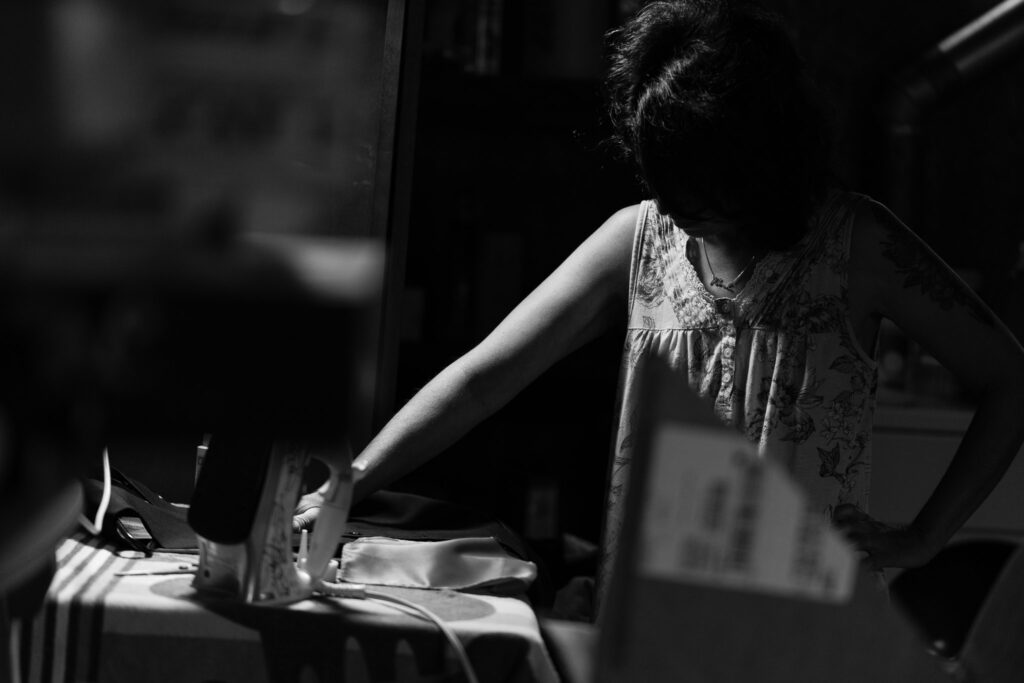
Tie Photography to a Trigger You Already Do
I learned this trick in counseling, but it works for everything.
Habits stick better when they piggyback on something you already do.
Here are some examples you might consider (adjust to your lifestyle and the things you do on repeat)
- Once you start your morning coffee, while it’s brewing, take one photo of whatever’s around. Look around your house, out the window, in the fridge, doesn’t matter. Try to get the shot before your coffee is done brewing.
- After dinner, scroll your Lightroom catalog and re-edit one old shot.
- On your weekly grocery trip, stop for 3 minutes in the parking lot and photograph a shadow, shape, or stranger.
It sounds silly, but these tiny rituals add up, and that’s what we are trying to build here. Not motivation… habits.
Track It – but Keep It Light
You don’t need a spreadsheet or habit app (unless that excites you). But some form of “yes, I did this” can help.
Here’s what I like (pick one or make your own):
- A calendar with ✅ on days I shoot (A calendar made from your photos is even better)
- A physical notebook where I jot one sentence about what I photographed (can talk about light, location, feeling, whatever)
- A shared folder on my desktop labeled “Daily Chaos” that I toss one image into each day
You don’t have to make a masterpiece. Just make a mark.
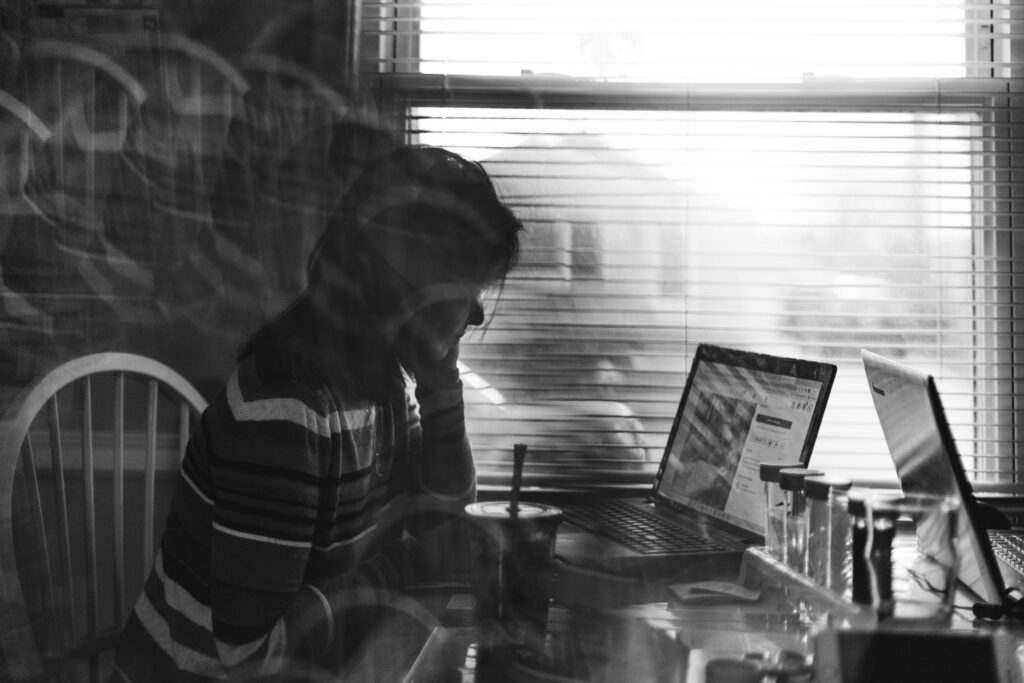
This Blog Runs on Coffee, Photos, and Your Support
I mint select images as NFTs and list the gear I use. Collecting or shopping through my links is like buying the blog a coffee. ☕ 🧡
Allow Yourself to Miss Days – But Don’t Miss Two in a Row
This one changed everything for me.
Missing one day? Human. Normal. No big deal.
Missing two? That’s when the guilt kicks in and the habit starts to crumble.
So give yourself the grace to skip, and the structure to come back quickly.
There’s not need to dwell here.
Let’s just get out there and take one more shot. Right now. Do it now.
How to Bring Fun Back When Photography Feels Like a Chore
Sometimes, the rut isn’t from laziness. It’s from boredom.
To shake things up:
- Try getting a Speedlight if you’ve never worked with flash and explore new opportunities in the world of flash photography.
- Only shoot with one color in mind.
- Come up with a collection theme. Go out with a purpose. I’m looking for “evidence that humans were here.” That’s the theme.
- Do a photo scavenger hunt with friends or strangers online.
- If your camera supports it, experiment with double or multiple exposures like this next image.
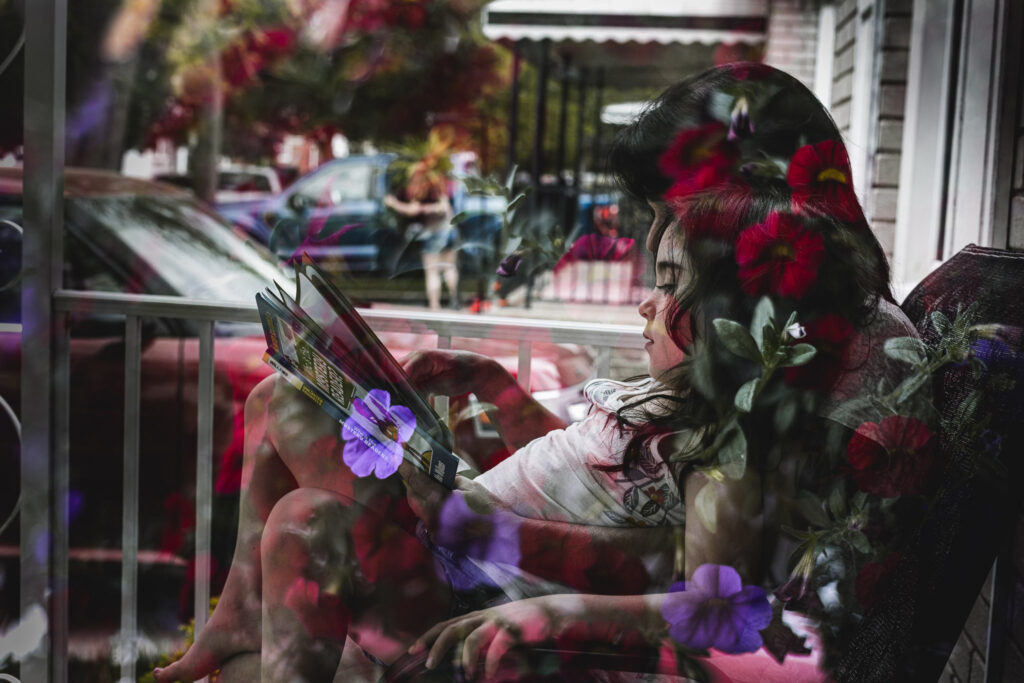
Whatever it is, remind yourself that photography isn’t homework. It’s play. It’s supposed to be fun. I mean, unless it’s your job. Then maybe it’s something else but I think I mostly reach people who see photography as a hobby or passion, and not really a job.
Some of my favorite images came from the days I didn’t want to shoot but did anyway. Not because I forced it. But because I let it be easy.
What does EASY look like for you?
Let me know below, or better yet, commit to one tiny habit this week and come back to tell me how it went.
🖼️ Collect an NFT and support this blog
📬 Subscribe to get Wednesday’s post + Friday’s What If Nobody’s Watching
💬 Comment below with your weirdest photo habit or your tiniest win this week
💬 What Did This Post Make You See?
Leave a comment and share what this post made you think, feel, or notice.
👀 NFT Friends
Feel free to drop your public wallet address with your comment… because who knows right…
🖼️ Before Language, After Light
Default Gallery: Featuring recent photography and artwork from creators I’ve collected on Tezos. Updated regularly to reflect the spirit of each post. → View Full Curation on OBJKT
🟢 Currently Open for Submissions
Have a Tezos NFT that fits this post’s theme? Share a link with your comment (link-only posts will get flagged as spam). I may collect or feature it here or in a future post.
Support independent creators. Discover and collect below.
About the author : Michael Falk

Hi, I'm Michael. I feel like I'm supposed to mention an award here. Maybe, some kind of grand accomplishment. None yet, but I'm working hard on finding the right combination of words or arrangement of pixels that will make me famous. In the meantime, let's practice photography, drink coffee, and grow together.