

Photography Composition Techniques for Beginners
I was standing in the kitchen the other day, just doing the dishes, when I started to think about photography. You have to let your thoughts wander because doing the dishes is boring.
That’s how we end up with posts like “Photography and the Art of Seeing“. I think a lot about everything… and nothing.
Like these dishes in the sink. The coffee mug was just sitting there, kind of off-center and overlapping the drain. Not even in the light.
Then I started thinking, is there a photo here? Turns out… not so much. But, as mundane as this scene is, it got me thinking about balance. It got me thinking about composition.
Even Penny the Pug had some input. She was standing there at my side, and I swear I heard her say something like, “That cup has terrible composition,” followed by… “You got any of those table scraps?”
You know, she was giving me that look: The “Michael, you need to give me food look” and maybe the “Michael, you need to get out of the house more”, look.
And I guess that’s the thing about photography. You can become obsessive. Not just about light. Not just about photography composition techniques. But about how you see. The world becomes one long hunt for balance, lines, and frames.
Even in the kitchen sink.
Why Composition in Photography Matters More Than You Think
So maybe the best way to think about composition is like cooking. Yeah, we are staying in the kitchen.
You can cook pasta without salt, sure, but it won’t taste right.
Same with photos. You can press the shutter without thinking about where things land in the frame, but the result often feels off.
Now, honestly, sometimes throwing the camera in the air and just hitting the shutter is fun. Sometimes you end up with the happy accident that never would have happened if you were trying too hard to follow a recipe.
But most times, it will feel like something could have been better. That’s because composition is the seasoning. It’s what makes a viewer stop scrolling, tilt their head, and wonder why an image feels right… or wrong.
In this post, we’ll walk through the essential photography composition techniques every beginner should know. You’ll get practical tips you can use right away, but also a way of seeing the frame differently.
My First Encounter With “Rules” of Photography
Back when I first got my Canon 60D, the manual felt like it was written in another language. ISO, aperture, shutter speed… okay fine, I could Google that. But when someone said “rule of thirds,” my brain started to get lazy.
It wasn’t until I was walking around my neighborhood in the winter, the light bouncing off snowbanks, breath fogging in front of me, hands freezing, that I realized I’d been centering everything out of habit. Trees dead-center. Street signs like bullseyes.
A friend showed me how moving a subject off to the side instantly gave a photo more tension. It was like learning a new chord on guitar. Suddenly, I had options.
That’s when it clicked so to speak. You see, composition isn’t about following rules. It’s about creating choices.
1. The Rule of Thirds: Your First Training Wheels
I know, but this post is for beginners. We can’t just skip rules because you know it all.
I get it, you might even think the rule of thirds is overrated, but it’s still one of the easiest ways to start improving photos fast.
And it’s simple. Just divide your frame into a tic-tac-toe grid (most cameras/phones can show this on screen). Place your subject along one of the lines, or at an intersection, and watch the magick.
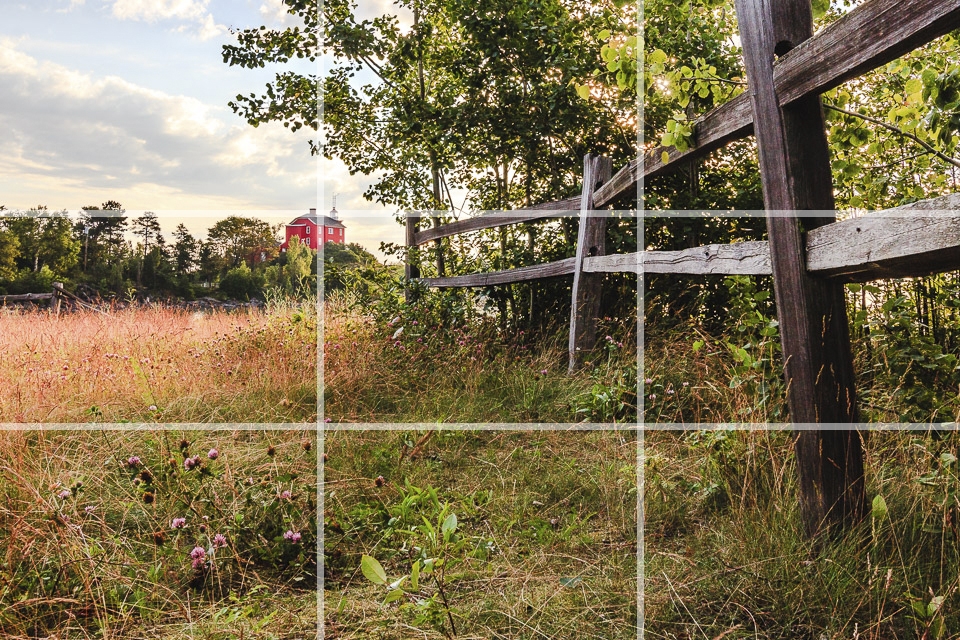
Why it works: our brains love asymmetry. We don’t consciously notice the grid, but the balance feels natural.
See Imagery Tip: next time you’re photographing a friend at a coffee shop, don’t plop them in the center. Shift them left, and let the neon sign in the background fill the empty space. Suddenly the photo tells two stories at once.
2. Leading Lines: Let the World Point For You
If you find yourself wandering down a sidewalk, notice how the cracks stretch into the distance. Those are leading lines, and they love to guide viewers straight into your photo.
Roads, rivers, fences, shadows. You can find lines in anything that stretches away from the foreground, and they help pull the eye where you want it.
See Imagery Tip: crouch lower. No, lower than that. The closer you get to the ground, the stronger those lines become. A boring street turns into a dramatic runway just by changing perspective.
3. Framing: Frame within a Frame
One of the hardest things about photography is deciding what to leave out. That’s where framing comes in.
Use what’s already around you. Think windows, arches, doorways, and tree branches to create a frame within a frame. It adds depth, context, and sometimes a bit of mystery. Saul Leiter was a master of using frames within a frame.
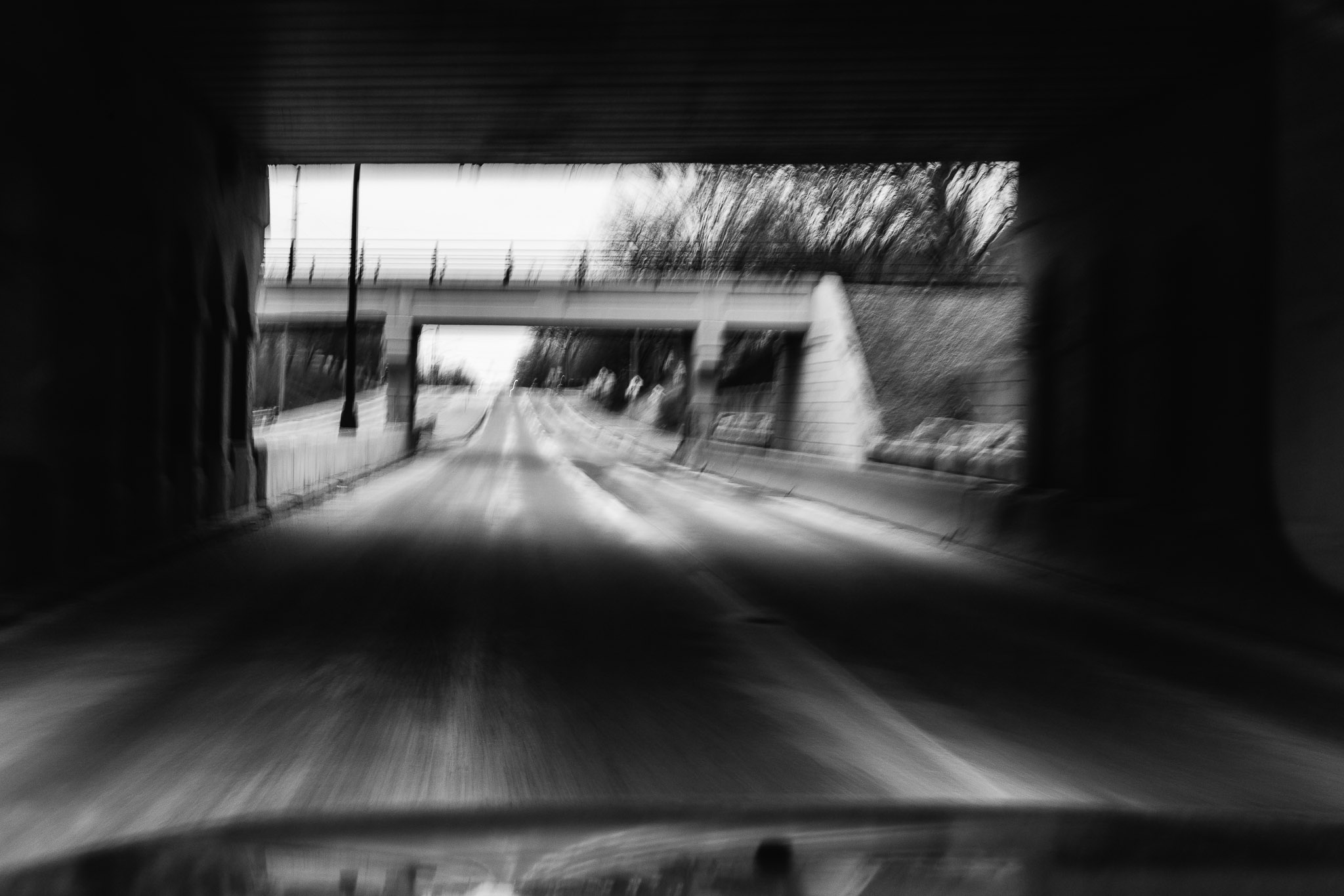
At some point, you’ve probably shot through the rear-view mirror of your car just to see what that looked like. Why? Because you were looking for a bigger story than just pointing your camera straight out the windshield.
Now get out there and find some more frames, within a frame. The photography gods demand it!
4. Symmetry and Patterns: Order in the Chaos
Humans are weird. We crave order even while driving around in our messy cars. OK, maybe that’s just me. Maybe you are the opposite, and don’t have shit everywhere.
Either way, symmetry and patterns work for us when it comes to our photos.
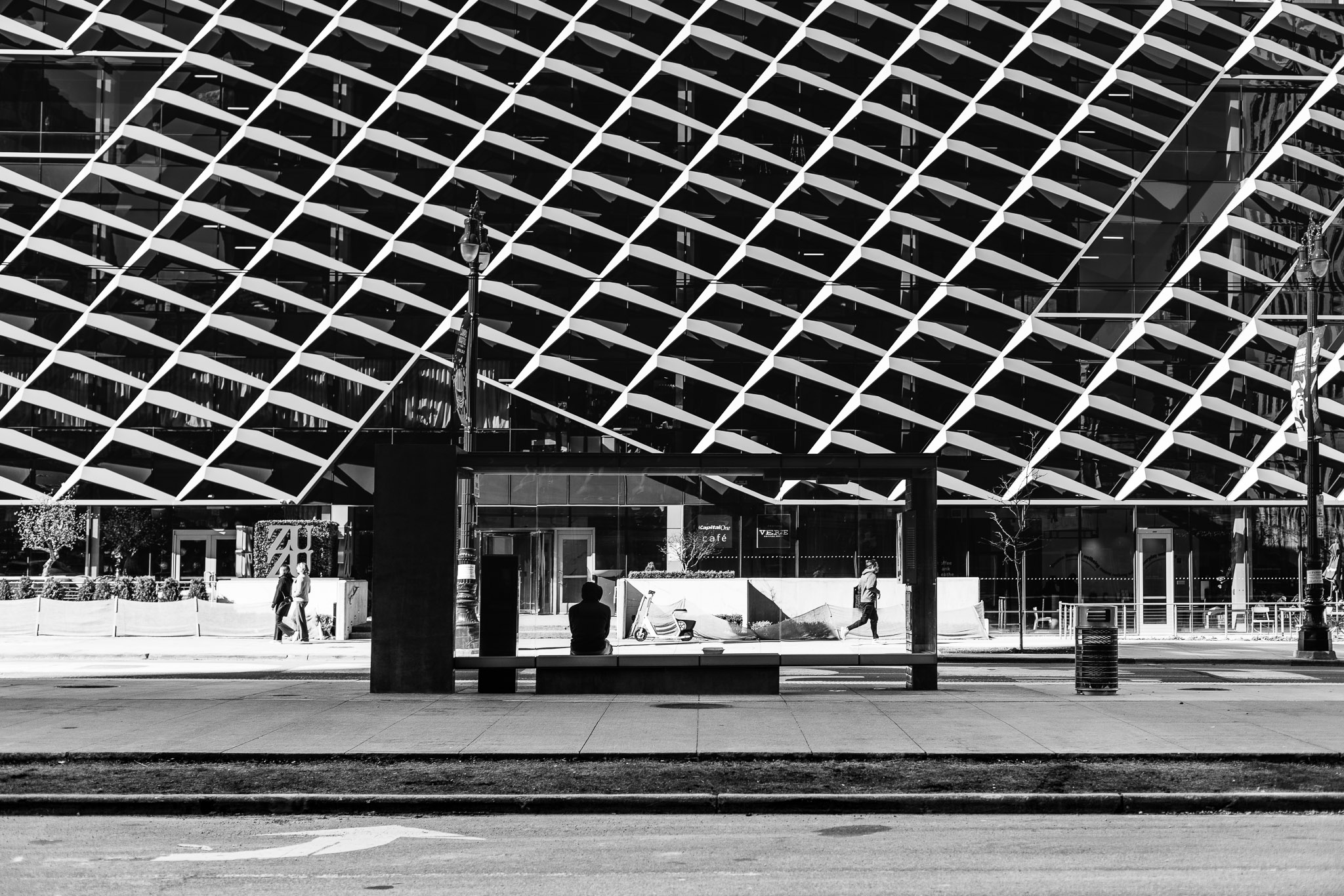
A row of lockers, identical windows, repeating tiles. All these create rhythm. And if you break the pattern with one odd detail, the photo gets even more interesting.
Example: picture a row of shoes lined up outside a gym. Then one Croc is turned upside down. That’s the photo.
Do you have any photos that bring a little order to the chaos?
5. Negative Space: Let the Empty Parts Breathe
Sometimes it helps to stop filling the frame with stuff.
Negative space is the art of letting emptiness do the work. A single bird against a wide sky. A person dwarfed by a blank wall. Silence inside the picture.
Some people are really good at this. They have a knack for breaking down a scene into its most simple form.
You probably don’t realize it, but the empty areas are just as powerful as the subject. They create mood. Think isolation, freedom, loneliness, calm.
See Imagery tip: next time you’re shooting on a cloudy day, don’t crop the sky out. Make it most of the frame. Let your subject shrink.
6. Depth and Layers: Photos Aren’t Flat, Even If They Pretend to Be
At some point, you’ll notice your photos look flat compared to what your eyes saw. That’s because cameras squash reality into two dimensions.
The easiest way to fight back? Add layers.
Put something in the foreground. Include a fence, flowers, or even some random stranger’s shoulder. Just keep your subject in the middle layer, and let the background tell its own story.
Suddenly, your photo has depth. It feels like you could walk right into it.
7. Breaking the Rules: Because Your a Rebel!
The weird thing about photography composition techniques is that the “rules” are more like training wheels. They help you ride, but eventually you take them off.
Center a subject dead in the middle if you want intensity. Tilt the frame if balance feels boring. Chop someone’s head out of the photo if the story is really in their shoes.
The problem is when photographers never break the rules. Your images start looking like everyone else’s.
So maybe the best way to learn composition is to follow the rules long enough to understand why they exist… and then start ignoring them one by one.
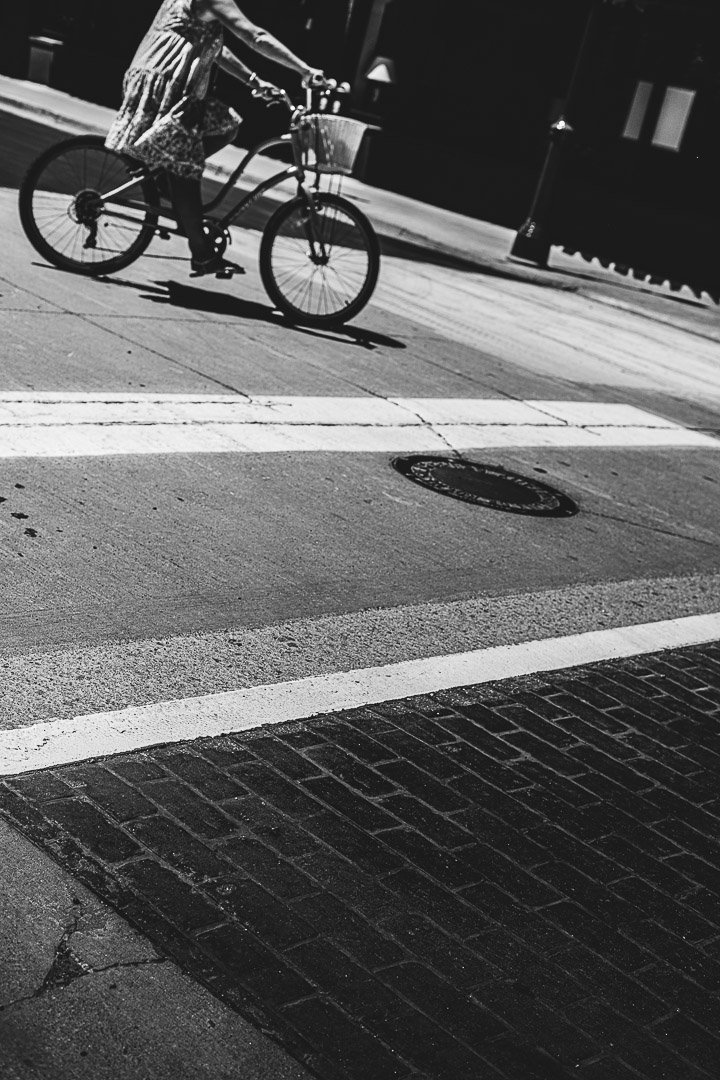
8. Don’t Try So Hard: Just Let Chaos Rule
Sometimes you can just point your camera in the general direction you want to take a photo and press the shutter to see what happens. Yeah, I’m not joking.
There is a random chaos to it that your brain can’t seem to duplicate. Your brain wants order. But sometimes the missing ingredient is something beyond your control.
You can’t see it because it’s not about foresight. It’s about chance. It’s about finding meaning and imagination in the “happy accident” that’s only available to those who roll the dice.
I think Bob Ross would love the idea of embracing uncertainty, don’t you?
See Imagery Tip: Carelessly lift your camera in the general direction of your subject and press the shutter. You have one photo of chance. Now, aim, recompose to appease your brain, and see how the stories between the two photos differ.
How to Train Your Eye – Practice Everyday
You don’t need a big trip to practice these techniques. Try these little exercises:
- Shoot repetition: 10 photos of cracks in the sidewalk. Then lay them out together.
- Flip perspective: Photograph the same object standing, sitting, and lying flat on the ground.
- Limit yourself: Only shoot vertical frames for a week. Or only reflections.
- Borrow a kid’s view: Hand the camera to a child and see how they frame the world at 3 feet tall.
Photography composition techniques aren’t abstract ideas. They’re habits you build by noticing the everyday weirdness around you.
Composition in the Digital Age – Instagram Grids and AI Weirdness
OK, we are almost done with this post but I wanted to touch on Instagram and AI real quick.
One of the hardest things about shooting today is that everything gets compared on tiny screens. Your masterpiece shrinks to a 3-inch square between the perfect food flat lay and cat memes.
Don’t get me wrong. I love cat memes.
But that’s why composition is more important than ever. Strong shapes and clear subjects survive the noise of someone lost in the doom scroll. At least that’s the hope.
And then there’s AI.
You love it, You hate it, or you love to hate it. I’ve said it before and I’ll say it again. My relationship with AI is at best… complicated.
It generates “perfect” compositions by default, but sometimes too perfect. Which makes me want to keep shooting crooked alleys and off-balance photos just for spite. Just because the imperfect feels perfectly human.
Don’t you think?
Closing Thoughts – The Cup is still in the Sink
So yeah, the coffee mug is still sitting in the sink. I wanted to take a photo that felt balanced with the drain and edges of the sink, so I moved the cup and reframed a little. I also moved the cup into the light. I don’t really like any of the photos but I had my fun.

It’s more orderly, giving a calmer, more structured feeling.

Maybe that’s the curse of learning photography composition techniques. You can’t unsee balance once you’ve seen it.
But eventually, it stops being a burden and becomes a kind of game. Like spotting constellations in the night sky or searching for the perfect rock on the beach.
And when you come upon the perfect rock you might think, should I move it to create more interest and balance in the scene? OR, is more important to capture the moment as it was, as it arrived for you?
I’ll leave that up to you… until next time.
What weird thing did you notice today that could have been a photo?
🖼️ Collect an NFT and support this Blog
📬 Subscribe to get Wednesday’s post + Friday’s What If Nobody’s Watching
💬 Comment below with your own thoughts on composition techniques
💬 What Did This Post Make You See?
Leave a comment and share what this post made you think, feel, or notice.
👀 NFT Friends
Feel free to drop your public wallet address with your comment… because who knows right…
🖼️ Collectors!
If you ended up collecting something from this post—mine or another artist’s—let me know which piece and definitely share your public wallet address.


Leave A Comment